

























Womb Transplant Baby Born Changes the Landscape for Women with MRKH after Deceased-Donor Procedure

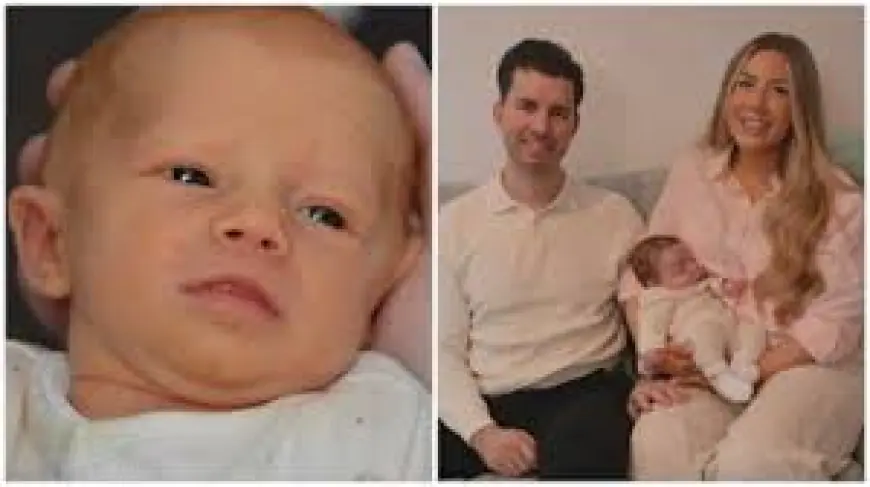
The arrival of a Womb Transplant Baby Born in the UK shifts the immediate horizon for women born without a viable womb: women with MRKH syndrome and couples exploring parental options are the first to feel the real-world impact. Grace Bell, in her 30s, and partner Steve Powell from Kent now care for their son Hugo, whose birth reframes conversations about transplant pathways versus surrogacy for a specific, small group of patients.
Womb Transplant Baby Born: who is affected and how
Here’s the part that matters: this birth puts a practical example into clinical discussions and family decisions. Women born without a viable womb — like Grace Bell, who does not have periods but does have normal ovaries — are directly implicated. The condition is named MRKH syndrome and is stated to affect one in every 5, 000 women in the UK. For families weighing options, the demonstration that a deceased-donor womb can result in a live birth removes some theoretical uncertainty and creates a new reference case for counseling and planning.
Key facts from the case (embedded details)
- Parents: Grace Bell (in her 30s) and partner Steve Powell, from Kent.
- Baby: Hugo, now 10 weeks old and born just before Christmas 2025, weighing nearly 7lbs.
- Delivery location: Queen Charlotte's and Chelsea Hospital in west London.
- Transplant operation: a 10-hour womb transplant at The Churchill Hospital in Oxford in June 2024, using a uterus from a deceased donor.
- Fertility pathway: IVF treatment some months after the transplant and embryo transfer at The Lister Fertility Clinic in London.
- Clinical trial context: the transplant is one of 10 taking place as part of a UK clinical research trial; three transplants have been carried out and this is the first baby born from that group.
Timeline snapshot
- June 2024: Womb transplant operation at The Churchill Hospital, Oxford (10-hour surgery).
- Some months later: IVF and embryo transfer at The Lister Fertility Clinic in London.
- Just before Christmas 2025: Hugo is born at Queen Charlotte's and Chelsea Hospital, west London (nearly 7lbs).
- Current: Hugo is 10 weeks old.
Questions readers are likely to ask — brief Q&A
Q: Why is this case being highlighted? A: It is the first child in the UK born after a womb transplant from a deceased donor, carried out inside a 10-transplant clinical research trial.
Q: What were the alternatives for the couple? A: Their only options, as stated, were to hope for a womb transplant or to pursue surrogacy.
Q: How did the family respond? A: Bell and Powell paid tribute to the donor and her family for their "kindness and selflessness" and thanked the medical teams in Oxford and London who supported them.
Reactions, research context and cautious signals
Surgeons involved described the birth as a ground-breaking moment that could offer hope to many more women with a similar diagnosis. The team framed this outcome within an ongoing clinical research trial of 10 transplants; three transplants have been performed so far and this is the first birth from that cohort. The real question now is how the remaining trial cases progress and whether outcomes remain consistent as the study continues.
It’s easy to overlook, but the case also underscores the emotional and ethical layers around deceased-donor organs being used for reproductive purposes: Bell and Powell spoke about thinking of the donor and her family every day and hoping they find peace, while medical teams were explicitly thanked for supporting the couple’s journey.
For clinical and patient communities, the next signals that will matter include additional births from the trial, longer-term maternal and child follow-up data, and confirmation that surgical and fertility steps can be reliably paired in other cases. Timeline and trial details are noted above and are subject to change as the research continues.
What’s easy to miss is that this individual case ties together multiple specialties — transplant surgery, reproductive medicine and neonatal care — and that each stage required coordinated facilities in Oxford and London to reach this outcome.