























Snow Storm Weather Forecast Nyc: Mayor Mamdani Orders Citywide Travel Ban as Flights and Power Services Collapse

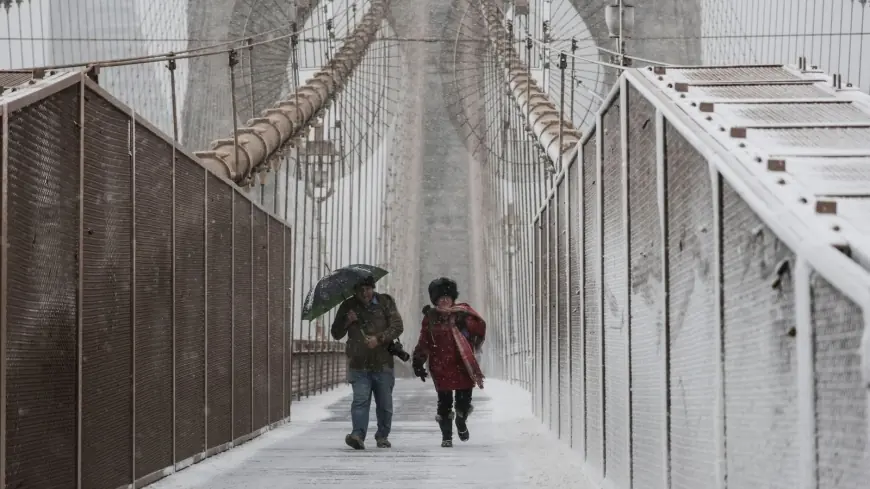
The snow storm weather forecast nyc has prompted a citywide travel ban, a state of emergency and extensive service disruptions across the northeastern United States. The storm has already left parts of the east coast buried under more than 22 inches of snow, grounded thousands of flights and produced widespread power outages.
Snow Storm Weather Forecast Nyc — Zohran Mamdani's travel ban and emergency orders
New York City Mayor Zohran Mamdani declared a state of emergency and imposed a ban on all non-essential travel, limiting movement across streets, highways and bridges between 9pm on Sunday and noon on Monday; the restriction does not apply to essential workers or those traveling for emergencies. Another notice in the city set non-essential travel banned until midday local time (17: 00 GMT). Mamdani also announced that public schools will observe a full "snow day" on Monday: "No online school, no remote learning, full classic snow day. " He urged residents to stay inside, telling a broadcaster: "Staying home means you are staying safe. " Outreach teams were mobilized to bring unhoused New Yorkers into shelters and warming centres.
National Weather Service warnings, snowfall totals and wind threats
The National Weather Service has extended winter storm and blizzard warnings from North Carolina to northern Maine, and warnings also cover parts of eastern Canada. Some areas have recorded more than 22 inches of snow, and forecasts warned of up to 1 to 2 feet (60cm) in many locations. The service warned that the storm, once it intensified on Sunday afternoon, could be significantly more severe than earlier projections and could produce whiteout conditions, downed tree limbs and sporadic power outages. Wind gusts are expected to reach as high as 70mph in some coastal areas, and forecasters warned of a possible 2 to 4ft storm surge that could cause coastal flooding and beach erosion from Delaware Bay to Cape Cod during high tide cycles.
Flight cancellations and airport disruption at JFK, LaGuardia and Newark
Air travel was heavily disrupted. More than 5, 000 flights into and out of US airports had been cancelled across the region, and a separate flight tracker logged in excess of 6, 000 cancellations through Monday, with major hubs including JFK, LaGuardia, Newark, Philadelphia and Boston Logan among the hardest hit. Time-lapse footage captured the Empire State Building engulfed by snow overnight as airports and airlines struggled to operate amid the storm.
Power outages, remote-work guidance and local agency warnings
Utilities and state agencies reported significant impacts. Nearly 240, 000 people were left without power, the PowerOutage website shows, while descriptions elsewhere noted "hundreds of thousands" without electricity. The New York State Division of Homeland Security and Emergency Services warned of near-impossible travel across New York City and Long Island and cautioned that strong winds and intense snowfall rates would produce whiteout conditions across Downstate New York. The state Department of Transportation advised workers to telecommute where possible.
Schools, frontline preparations and community responses
School systems in New York City, Boston and Philadelphia either cancelled classes or moved to remote instruction, though New York specifically designated a classic in-person snow day. City crews and contractors were mobilized: additional snow-clearing equipment arrived from outside the city, officials expanded use of geocoding to map bus stops, crosswalks and ramps that need clearing, and municipal teams recruited people to shovel on foot, some starting work on Sunday night to tackle the first wave of snow.
Local scenes: Cambridge, Brooklyn and frontline voices
Residents described rapidly worsening conditions. In Cambridge, Massachusetts, Mari Scheiffele said the snow and wind intensified over a few hours, with heavy, wet snow and gusts bringing down branches; she noted a high level of preparedness and that school closures had been announced since the day before, while colleagues out of town were stuck because flights had been cancelled. Brooklyn resident Brandon Smith expressed frustration that workplaces remained open despite suspended road access. Forecaster Frank Pereira warned that conditions were expected to rapidly deteriorate and said the storm could meet the technical threshold for a "bomb cyclone, " defined as a pressure drop of at least 24 millibars in 24 hours. What makes this notable is the scope of disruption: more than 35 million people were in the storm's path, and officials across multiple states took simultaneous emergency actions that directly curtailed travel, schooling and normal city services.
The combined measures — travel bans, school closures, expanded snow-clearing resources, outreach to unhoused residents and coordinated warnings from weather and state agencies — were driven directly by the storm's rapid intensification, heavy snowfall and high winds, which together produced treacherous, potentially life-threatening conditions for the region.