

























Local News: Churches Team Up to Keep Keene’s Overnight Warming Shelter Running — Who Is Affected First

This matters most to Keene’s unhoused residents and the volunteers who help them: a church partnership is preventing a gap in nightly shelter capacity for the month of March. In plain terms, the move keeps 20 beds available each night from 9 p. m. to 7 a. m., and shifts two nights of operations to a different church building so the shelter can remain open through the end of March. local news readers will want to know where the shelter will be and how services will continue.
Local News: Immediate impact on residents, volunteers and operations
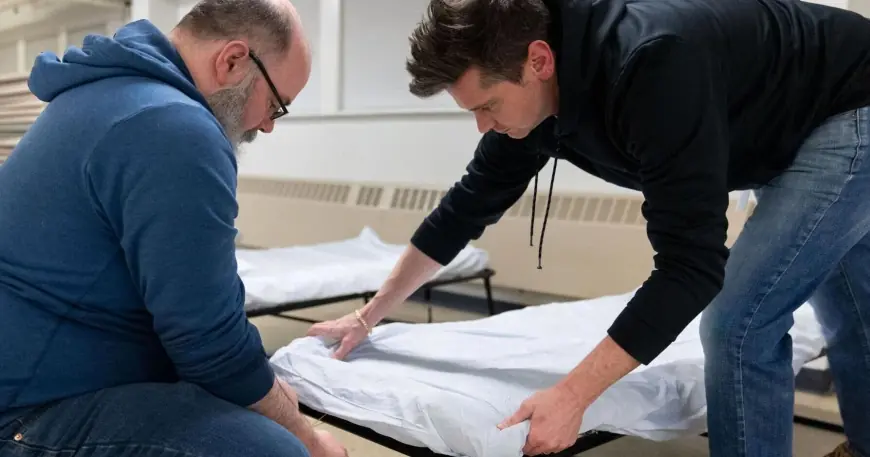
The switch preserves the continuity of overnight shelter services for people who rely on them nightly. With an average nightly use of 10 to 13 people this season and a roster capacity of 20 beds, the arrangement reduces the risk that individuals would be left without an option on nights when the usual space is unavailable. Volunteers who prepare beds and run the shelter can plan staffing knowing a backup site is secured for the two affected nights.
Here's the part that matters for anyone connected to the effort: the shelter’s schedule and location changes are limited and specific, not an open-ended disruption. That predictability matters for client intake, volunteer shifts and the broader local support network.
Event details and essentials for access
The overnight warming shelter originally opened on Jan. 20 and is slated to operate through the end of March. Daily operations run from 9 p. m. until 7 a. m. The primary site is the United Church of Christ at Central Square, but the space there will not be available on March 8 and March 13. On those two nights the shelter will move to St. James Episcopal Church at 44 West St.
Capacity figures and recent usage provide context: the shelter has 20 beds and has served a total of 27 people as of Friday, with an average nightly occupancy this season of roughly 10 to 13 people. The local human-services organization that coordinates the warming shelter also runs a separate permanent 48-bed shelter on Water Street; that organization had previously hosted the warming shelter in its resource room but is no longer able to do so.
- Operations window: 9 p. m. –7 a. m.
- Primary site: United Church of Christ at Central Square (through March, except two nights)
- Alternate site: St. James Episcopal Church, 44 West St. (March 8 and March 13)
- Beds: 20 for the warming shelter; the coordinating organization also manages a 48-bed permanent shelter on Water Street
- Usage so far this season: 27 individuals served and average nightly occupancy of 10–13 people (as of Friday)
Key takeaways:
- Keeping the shelter open nightly removes short-term displacement risk for people who use it regularly.
- Volunteers and staff can adjust shifts and logistics with two specific alternate-location nights announced in advance.
- Community members seeking to help should note the shelter’s hours and the two-night location shift rather than assume a service interruption.
- Confirmation that the entire month remains covered depends on the planned schedule through the end of March; stakeholders will be watching for any further changes.
It’s easy to overlook, but small venue swaps like this are often decisive: securing an alternate church space for just two nights kept a nightly program intact rather than forcing a temporary shutdown. The real test will be whether the established pattern holds through the end of March without additional venue conflicts.
If you’re wondering why this keeps coming up, note that limited facility availability and shelter capacity interact directly with nightly demand—so advance planning and community partnerships are the mechanism that prevented interruption in service.
For readers connected to volunteering or referrals: staff and volunteers are using the known schedule and the two-location plan to maintain intake and bed-prep routines; anyone planning to come to the shelter should follow the announced nightly hours and the two specific date changes for the alternate site.