

















Final Medal Count Olympics 2026: Johannes Høsflot Klæbo Leads Norway to Record Haul in Milan Cortina

Norway closed the Milan Cortina 2026 Games with a dominant showing, and the final medal count olympics 2026 underlines how the country continued a run of Winter Olympic supremacy. The results carry weight because they reflect a long-running development model that produced champions across winter and summer sports.
Tore Øvebrø’s end‑of‑Games reaction and earlier tally
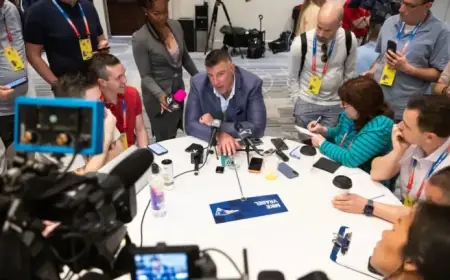
Tore Øvebrø, Norway’s director of elite sport, sounded hoarse when he picked up a phone call and said he had just caught a cold and had been cheering over the last two weeks. “It didn’t help, ” he chuckled a few days ago, adding that he had “to cheer just now because we’ve just won another gold in the Nordic Combined. ” At that moment he noted, “We have 16, that’s the Olympic record, and we hope for a couple more. ”
Final Medal Count Olympics 2026: Norway finishes Milan Cortina with 18 golds and 41 medals
By the end of the Italian Games, Norway had recorded a total of 18 gold medals and 41 total medals. The country’s performance in Milan Cortina 2026 extended a streak: from 2018 in Pyeongchang through the Italian Games in 2026, the Norwegians have always come out on top at the Winter Olympics.
Small population, outsized results — numeric comparisons
Norway’s population is roughly five-and-a-half million people, about the same as the U. S. state of South Carolina. That small pool has beaten far larger nations: China at about 1. 4 billion, the United States at about 342 million, Germany at about 84 million, Italy at about 59 million and Canada at about 40 million.
How broad sporting success appears beyond winter disciplines
Norway has recently produced Olympic champions in beach volleyball and several champions in track and field. Their triathlon program is celebrated as the best in the world. Individual Norwegian stars named in recent coverage include Viktor Hovland as one of the top golfers, Casper Ruud reaching world No. 2 in the ATP rankings, Erling Haaland described as one of the most feared strikers in the “Beautiful Game, ” and Ada Hegerberg as a Ballon D’Or winner.
Grassroots rules and selection philosophy shaping later success
A common theme cited by Norwegian officials is an emphasis on fun and enjoyment beginning at the grassroots level. Until the age of 12 in Norway, nobody in youth sports is allowed to keep score and there are no league standings. Young athletes are encouraged to try multiple sports, there is less destructive pressure, and if one player gets a trophy everyone gets a trophy to encourage return rates.
Officials argue a small country can’t afford to lose athletes whose talent may emerge in their later teens; Norwegian coaches do not tend to mistake early bloomers for long‑term talent. Øvebrø put it bluntly: “I find that many of the big sporting systems are more occupied with getting rid of people at the young age than develop many. Why do I say that? It’s all about selection and selection is another way of getting rid of people. We are few. We have to take care of everybody. ”
Development case studies: Bryne FK, Erling Haaland and Johannes Høsflot Klæbo
Erling Haaland played in the same mixed development group of 39 boys and one girl at Bryne FK until he was 16. That group was never broken up into first, second and third teams, nobody dropped out, and a handful of those players ended up turning professional. Johannes Høsflot Klæbo, who always thought he’d be a soccer player, instead won six gold medals in cross‑country skiing in Italy to become the most successful Winter Olympian of all time, with 11 gold medals that surpass three other athletes who had eight golds.
The final medal count olympics 2026 thus reads as the product of deliberate development choices — from mixed youth groups at clubs to nationwide rules that delay competitive pressure — combined with elite individual performances across winter and summer sports.