




















Malinin’s Free Skate Collapse Hands Men’s Olympic Title to Shaidorov at 2026 Winter Games

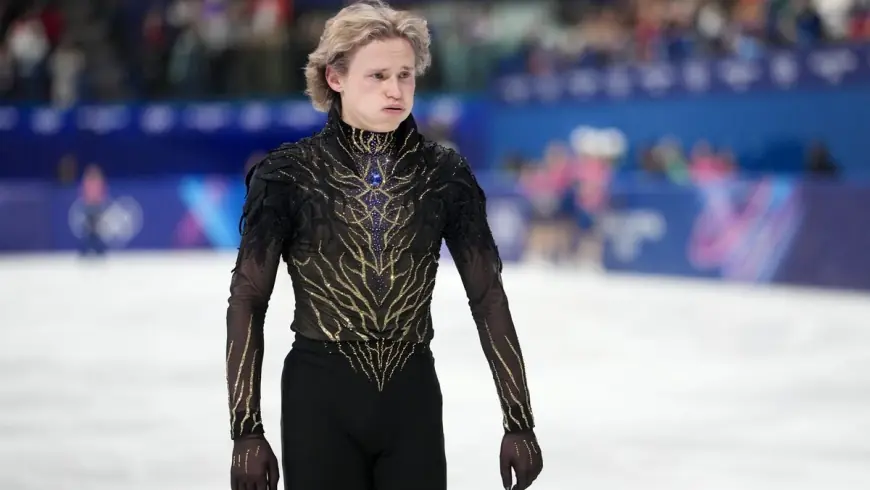
Ilia Malinin entered the men’s Olympic free skate as the heavy favorite but imploded under the moment, falling twice and completing only a fraction of his planned quads on Feb. 13, 2026 (ET). Mikhail Shaidorov of Kazakhstan climbed from fifth after the short program to win gold in one of the most startling upsets in recent Winter Games history.
Stunning collapse on the Olympic stage
What felt inevitable before the long program turned into a dramatic reversal. Malinin, 21, began his skate with promise but quickly lost control of the technical elements that had made him the sport’s dominant figure. Two falls and several downgraded jumps left him with 264. 49 points and an eighth-place finish overall, a result far below expectations and well under his personal best of 333. 81.
Technical breakdown: the jumps that unraveled the program
The free skate started with a strong quad flip, but the program’s difficulty unraveled when attempts at revolutions either popped to simpler jumps or were downgraded. A planned quad axel — the sport’s most perilous element and one that Malinin has executed in competition — was aborted, reduced to a single axel. One quad was downgraded to a double, and a later quad lutz ended in a fall. The cumulative damage of negative grades of execution and element deductions left Malinin far short of the score needed to defend his lead.
Podium shake-up: Shaidorov rises, Japan collects silver and bronze
Mikhail Shaidorov surged to the top with a composed long program, finishing with 291. 58 points to become Kazakhstan’s first Olympic figure skating champion. Yuma Kagiyama took silver with 280. 06 points, repeating his position as runner-up at these Games, and Shun Sato rounded out the podium with 274. 90. The results underscored how quickly medal projections can change in a sport where a single fall can rewrite the leaderboard.
Malinin’s response and the weight of expectation
After the event, Malinin was blunt about the experience. "I blew it, " he said following his performance on Feb. 13, 2026 (ET). He acknowledged the pressure of his first Olympics and the way the occasion can compress time and decision-making during a program. That pressure, he said, made it difficult to find the normal rhythm that usually carries him through high-stakes competitions. The disappointment is sharpened by his earlier success at these Games, where he contributed to a team gold — a reminder of both his capacity and the thin margin between triumph and heartbreak in elite sport.
Implications for the sport and the quad arms race
The free skate in Milan crystallized two trends: the increasing technical ceiling of men’s skating and the psychological toll of pursuing unprecedented elements. The quad axel remains a theoretical and contested frontier; while only Malinin has landed it in competition, even he could not summon it cleanly on the Olympic stage. Coaches and athletes will spend the next season weighing risk versus reward as the sport balances technical ambition with consistency.
This result leaves a reshaped landscape heading into the next four years. For Shaidorov, the victory marks a career-defining moment and a breakthrough for his nation. For Malinin, the crash will be a formative chapter — painful but potentially instructive as he processes the experience and plots a return to the top of a sport that rewards both daring and steadiness.