

























Asteroid Impact on Moon in 2032 Could Affect Earth

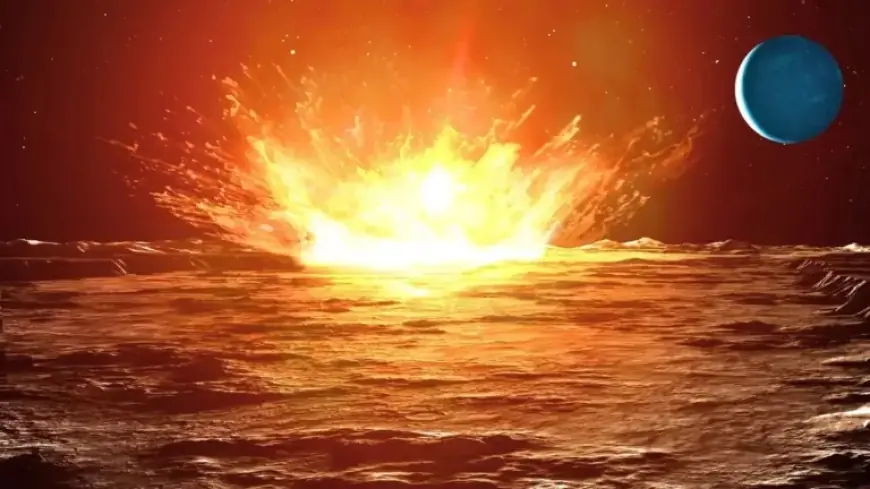
The potential impact of an asteroid on the Moon in 2032 presents both opportunities and challenges for scientists and Earth. On December 22, 2032, the asteroid known as 2024 YR4 has a 4 percent chance of colliding with the Moon, a scenario that could result in significant scientific revelations or dire consequences for Earth.
Asteroid 2024 YR4: A Double-Edged Sword
If 2024 YR4 strikes, the event could unleash energy comparable to a medium-sized thermonuclear explosion. This impact would be six times more powerful than a previous notable lunar impact recorded in 2013.
Scientific Opportunities
Should the asteroid collide with the Moon, it would create a unique research opportunity for physicists. Real-time data from the impact would provide insights into high-energy impacts, while vaporized lunar material would yield valuable scientific information.
The expected outcome of the impact includes:
- A crater approximately 1 km wide.
- A depth ranging between 150 to 260 meters.
- A central pool of molten rock about 100 meters wide.
- A magnitude 5.0 “moonquake,” the strongest yet recorded.
This event would enhance our understanding of the Moon’s geological history and composition without the need for artificial interventions.
The Aftermath: Debris and Visibility
The impact is projected to produce around 400 kg of debris, which could survive atmospheric reentry. Such a scenario would allow for a free lunar sample return mission, despite the charred nature of the samples.
During the peak of the impact, it is anticipated that as many as 20 million meteors per hour will enter Earth’s atmosphere, including 100 to 400 visible fireballs. However, the debris poses significant risks.
Potential Risks to Earth
The expected debris field, particularly over South America, North Africa, and the Arabian Peninsula, may lead to serious ramifications if larger pieces strike populated areas. Furthermore, the impact could threaten satellite systems critical for navigation and communication, possibly triggering “Kessler Syndrome,” which would severely disrupt orbital operations.
Future Considerations
In light of these risks, space agencies are contemplating potential deflection missions to reroute Asteroid 2024 YR4. However, this decision remains uncertain, especially considering the low probability of an actual impact.
As the 2032 date approaches, the scientific community will face a crucial choice: to pursue avenues for deflecting the asteroid or to embrace the opportunity for groundbreaking research. Regardless of the outcome, the event highlights the thin line between risk and discovery in our exploration of celestial phenomena.