
























Lukashenko: Beyond Putin’s Puppet, Trump’s Favored Strongman

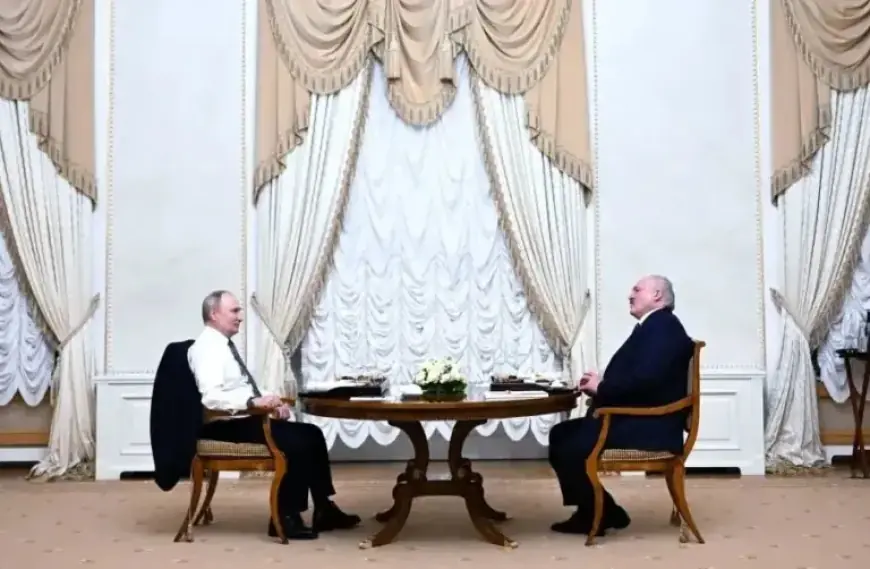
Belarus has often been viewed as a minor player in the politics of Eastern Europe, overshadowed by larger neighbors. However, the narrative surrounding President Alexander Lukashenko reveals a more complex role. While often considered a dictator, Lukashenko’s political maneuvers demonstrate a shrewd understanding of international relations that may redefine Belarus’s position in the world, especially under the developments shaped by U.S. former President Donald Trump.
Lukashenko’s Political Maneuvering in Eastern Europe
At 71, Alexander Lukashenko has emerged as a significant political survivor within the Russian sphere. His leadership style recalls that of Soviet-era leaders, benefiting from both a strong authoritarian grip on power and the ability to navigate between major powers like Russia and Europe.
In February 1997, Lukashenko’s ambitions reached a pivotal moment when he nearly became the leader of Russia itself. This occurred during a period when Boris Yeltsin’s popularity was waning, and Russia was transitioning after the Soviet Union’s collapse. Yeltsin aimed to integrate Belarus more closely with Russia through the formation of the “Union State.” However, Lukashenko’s strategic drafting of the treaty posed a threat to Russian sovereignty, prompting Yeltsin to intervene with swift negotiations to prevent Lukashenko’s rise to power in Russia.
From Isolation to Engagement
Lukashenko’s relations with the West have fluctuated. In 2020, widespread protests against his regime led to his ostracism from Western nations. The Belarusian leader, however, has recently sought to reshape his international standing. His involvement in Trump’s “Board of Peace” represents a significant shift, showcasing a new thaw in relations with the United States.
- In 2020, Lukashenko faced international isolation due to human rights violations.
- In 2022, Belarus allowed Russia to stage military operations from its territory amid the Ukraine conflict.
- In 2023, following U.S. re-engagement, Lukashenko completed several prisoner swaps, releasing 175 political prisoners in exchange for sanctions relief.
The Impact of U.S. Relations
By partnering with the U.S., Lukashenko aims to leverage his position as a mediator between Russia and Western interests. This dynamic is pivotal as American interests are increasingly shifting from Europe towards direct negotiations with Moscow.
Changing Alliances and Geopolitical Risks
This evolving dynamic has implications for Belarus’s political landscape. Lukashenko’s ability to navigate between the U.S. and Russia may allow him to carve out a new role, moving from a subordinate of Putin to a strategic partner. The ongoing war in Ukraine and its repercussions are reshaping how these leaders interact.
Despite his calculated dealings, Lukashenko’s regime has continued to face criticism for its authoritarian practices. Estimates show that over 1,100 political prisoners remain incarcerated, underscoring the ongoing human rights crisis in Belarus. This situation leaves Lukashenko with a dual edge—while he uses political prisoners as bargaining chips, these practices also threaten his legitimacy on the global stage.
Future Prospects for Belarus
The future of Belarus under Lukashenko is uncertain. As he plays a calculated game between the West and Russia, there remains a question of how much independence Belarus can maintain. The pressures of aligning with powerful allies while managing internal dissent create a precarious path ahead.
Ultimately, Lukashenko’s ambitions may either stabilize or further complicate Belarus’s position in Eastern European politics. As the landscape evolves, so too will the strategies of a leader determined to assert his influence while navigating the complexities of a divided geopolitical reality.