

























NASA Probe Tracks Interstellar Comet 3I/ATLAS to Measure Spin

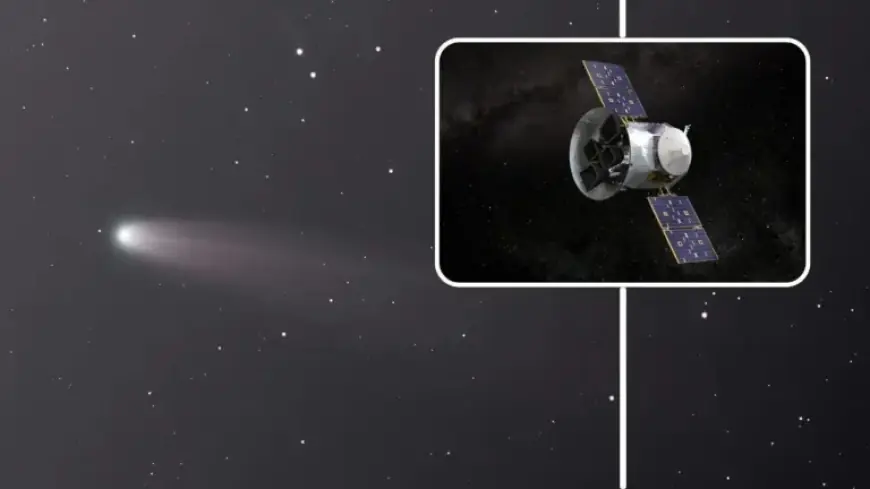
A recent observation by NASA’s Transiting Exoplanet Survey Satellite (TESS) captured interstellar comet 3I/ATLAS as it journeys beyond our solar system. This comet was closely monitored during a dedicated observation period from January 15 to January 22.
Navigating the Cosmic Trail of Comet 3I/ATLAS
TESS utilized its expansive field of view to track comet 3I/ATLAS as a bright, swift-moving dot adorned with a faint tail against a backdrop of stars. To create a comprehensive visual of the comet’s path, Daniel Muthukrishna from the Massachusetts Institute of Technology (MIT) compiled the observation data into a compelling 28-hour video.
Key Observational Events
- Observation Dates: January 15-22
- Video Duration: 28 hours of observations
- Brightness Measurement: Approximately 11.5 in apparent magnitude, about 100 times fainter than visible without telescopes
The observation was, however, interrupted when TESS entered a “safe mode” due to issues with its solar panels. Consequently, the video features a time jump between January 15 and January 18.
Insights into Cometary Behavior
Scientists aim to analyze this data to understand the comet’s activity and rotation. Such analysis may reveal significant information about the rate of material loss from the comet and the speed at which its core rotates.
Interestingly, TESS’s capabilities allowed astronomers to detect comet 3I/ATLAS even prior to its formal discovery. In May 2025, TESS recorded another comet two months before 3I/ATLAS was officially identified. This prior data enabled researchers to isolate this interstellar object from background noise.
Access to the Data
The findings from TESS’s January observations are publicly available through the Mikulski Archive for Space Telescopes. This wealth of data opens avenues for astronomers to uncover patterns of brightness in the comet’s activity, potentially unveiling more secrets about this interstellar traveler.
NASA’s ongoing commitment to monitoring such astronomical phenomena continues to enhance our understanding of the universe and its elusive visitors.