

























Finding the Exit from Escalating State Violence

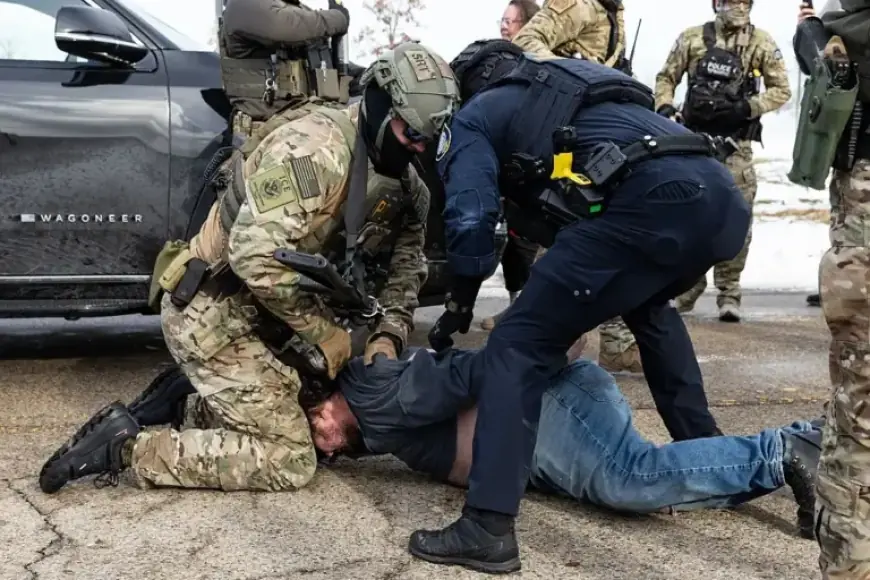
The issue of escalating state violence, particularly through the agency of Immigration and Customs Enforcement (ICE), poses significant challenges to democratic practices in the United States. Recent events illustrate how this agency has transformed from a regulatory body into a source of internal violence that threatens political freedoms.
Historical Context of State Violence
State-sponsored violence has historical precedents in the U.S., where various governmental forces have enacted brutality to maintain control. An example includes the Colfax massacre on April 13, 1873, when over 150 Black Republicans were killed by white supremacists during a contested election near Louisiana’s Red River. This act set a precedent for violence against marginalized communities, with peaks of brutality extending into the civil rights era, including the assassination of Fred Hampton in 1969.
ICE’s Role in Political Repression
ICE has become an integral part of a broader strategy of political repression. The agency’s actions mirror those of historical entities like the Ku Klux Klan and Pinkerton detectives, both of which operated outside traditional law enforcement frameworks. The state has mobilized ICE to enforce narratives that redefine dissent as “domestic terrorism,” conveying a sinister approach to managing political opposition.
Recent Developments and Implications
Actions taken by public officials following the murder of Renee Good illustrate how state rhetoric is evolving. For instance, statements from Department of Homeland Security leadership have falsely labeled victims of state violence as terrorists, reflecting a troubling shift in narrative aimed at vilifying dissenters.
- The White House has issued memoranda targeting “anti-fascist” groups, designating them as national security threats without solid evidence.
- Threats have been directed at witnesses of ICE encounters, discouraging public accountability.
- This damaging rhetoric is often amplified by right-wing media, which promotes false narratives to justify increased militarization of federal law enforcement.
Bureaucratic Expansion and Budgetary Concerns
Funding for ICE has surged dramatically in the past few years. In 2012, combined spending for ICE and Customs and Border Protection was approximately $17.9 billion. This has evolved significantly, with a budget allocation of $75 billion over four years under the Trump administration.
By 2025, ICE’s annual budget reached $28.7 billion, exceeding the military budgets of several countries. The recent increase in ICE’s spending on weaponry by 600% from 2024 further exemplifies this push towards militarization.
Future Outlook and Resistance
As midterm elections approach, the deployment of ICE is likely to escalate, raising concerns about voter suppression and intimidation tactics against progressive movements. The recent general strike in Minneapolis offers a model for resistance, underscoring the importance of solidarity among citizens.
Political alliances will be essential as the landscape shifts dramatically under these new enforcement strategies. To effectively counter this tide of state violence, grassroots movements and strong leadership will be crucial.
- Elections will be pivotal in determining the future use of ICE’s expanded authority.
- Public response to state violence needs to be coordinated and robust to discourage escalation.
In summary, the increase in state violence through ICE represents a significant threat to democratic practices in the U.S. A multifaceted approach involving public mobilization, understanding historical context, and solidifying alliances among progressive forces is vital in confronting these challenges.