U.S. Military’s F-35 Stealth Fighter Costs Soar to $2 Trillion

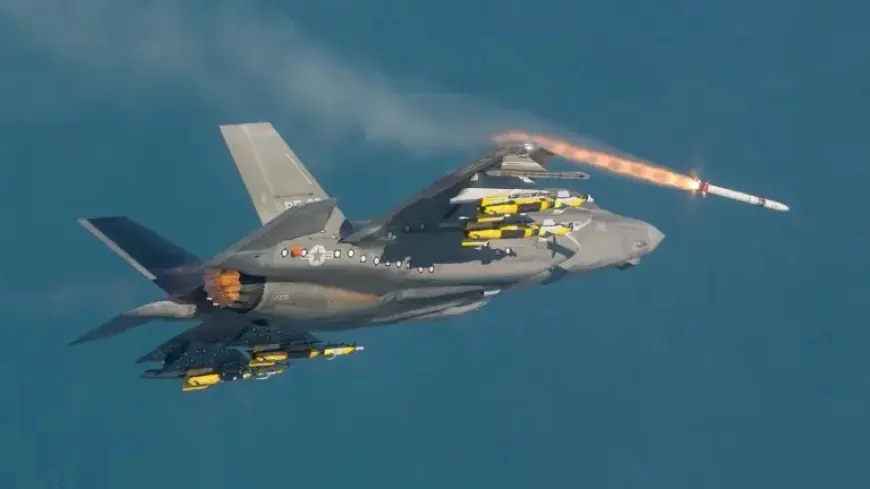
The F-35 Joint Strike Fighter program has been the center of attention due to its staggering lifetime cost of $2 trillion. This figure encompasses more than just the aircraft itself; it represents the entire operational ecosystem, spanning research and development, procurement, operations, and maintenance over several decades.
Understanding the $2 Trillion Price Tag of the F-35
While $2 trillion appears exorbitant, expert Harrison Kass suggests that context is essential. This price includes costs associated with the F-35’s projected service life extending into the 2070s or 2080s. The program’s longevity allows for the distribution of expenses over many years.
The Service Life and Longevity of the F-35
The Joint Strike Fighter entered service in the mid-2010s, and with planned upgrades, it may serve well beyond 2070. This lifespan parallels older models like the F-16, introduced in the 1970s and still in production, and the B-52, which began service in the 1950s and is expected to remain operational until the 2050s.
- F-35 entered service: Mid-2010s
- Projected service life: Until the 2070s or 2080s
- Original deployment of F-16: 1970s
- B-52 service duration: Expected until the 2050s
Breakdown of Costs
The $2 trillion figure is comprehensive, encompassing a variety of categories:
- Development and Acquisition: Approximately $400 billion
- Sustainment: $1.3 to $1.5 trillion
Sustainment will become the primary cost driver due to the numerous aircraft operating over long periods. The complexity of flying a stealth fighter significantly contributes to these expenses, covering fuel, parts, software maintenance, and personnel needs.
Challenges in Cost Comparison
Critics often juxtapose the F-35 with older aircraft such as the F-16 and F/A-18, which had lower program costs. However, modern threats necessitate advancements in stealth and technology, making direct comparisons challenging. The argument suggests that the alternative is not merely a cheaper fighter but an assortment of specialized aircraft, which would ultimately be more costly.
Evaluating the Worth of the F-35
Determining whether the $2 trillion cost is justified depends on national defense priorities. The F-35 offers diverse capabilities, including air dominance, strike missions, intelligence, surveillance, reconnaissance (ISR), and electronic warfare. Without the F-35, the U.S. would require a more extensive fleet of aircraft, each demanding additional training and logistics resources.
Should the F-35 serve effectively for 60 years or longer, its $2 trillion price tag may be seen as a reasonable investment in the future of U.S. air power. Designed for adaptability and long-term service, the F-35 represents a shift in defense strategy toward more sustainable military platforms.
In conclusion, while the F-35’s budgetary implications seem daunting, its potential to unify and streamline U.S. air capabilities may justify the expenses when viewed through a long-term lens.
For more insights into military technology and spending, visit Filmogaz.com.