
























Documentary Explores Urgent Fight to Save Great Salt Lake at Sundance 2026

The Sundance Film Festival premiered its final edition in Park City, Utah, a renowned hub for independent films. The festival will move to Boulder, Colorado, in 2027, after more than 40 years in Utah’s picturesque ski enclave.
Documentary Highlights Ecological Crisis at the Great Salt Lake
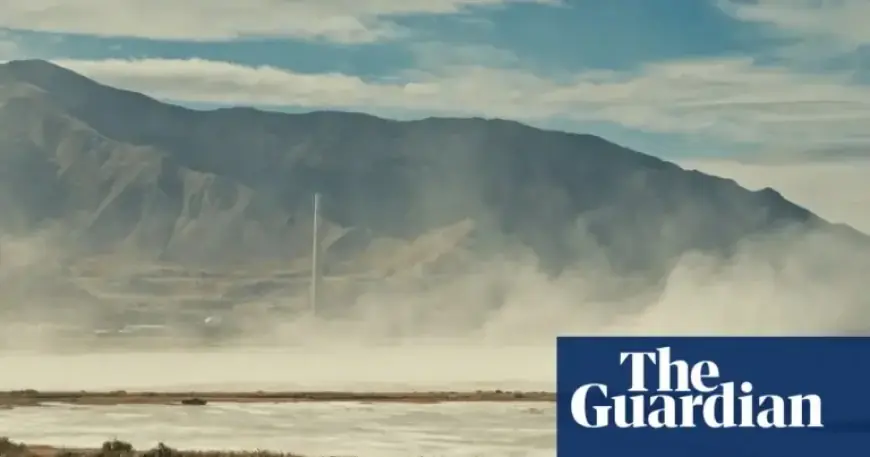
This year’s festival opened with an urgent documentary titled “The Lake,” directed by Abby Ellis. The film exposes the alarming decline of the Great Salt Lake, described by experts as an “environmental nuclear bomb.” Its disappearance poses threats to 2.8 million residents in the region.
Imminent Threat to Public Health and Environment
- The Great Salt Lake is the largest saline lake in the western hemisphere.
- It has lost 73% of its water and 60% of its surface area since 2022.
- Public health risks include toxic dust from the exposed lakebed, which carries arsenic and mercury.
According to ecologist Ben Abbott, failure to take corrective measures is “absolute insanity.” The new documentary builds on a co-authored report from Abbott and over 30 scientists, predicting the lake’s complete disappearance within five years if drastic actions aren’t implemented. With its surface area now less than 1,000 square miles, the Great Salt Lake is increasingly becoming a health crisis epicenter.
Economic Consequences of Decline
The projected loss of the lake would have severe economic implications, risking billions in damages. Essential industries, like mineral extraction and local tourism, face significant disruptions. Furthermore, ski resorts in the nearby mountains would be affected as well.
Historical Comparisons and Lessons
The film draws parallels with historical and ecological disasters, citing:
- California’s Owens Lake, known for severe dust pollution post-diversion.
- Iran’s Lake Urmia, which turned toxic due to industrial mismanagement.
- The Aral Sea, once a massive body of water, now largely desiccated due to Soviet irrigation projects.
Calls for Action and Governance Challenges
The documentary emphasizes the urgent need for systemic changes in water use policies in Utah. With over 80% of the lake’s natural inflow diverted for agriculture, stakeholders call for a comprehensive reassessment by state officials. Brian Steed, appointed as the first Great Salt Lake commissioner by Governor Spencer Cox, advocates for a balanced approach that considers the needs of farmers.
Collaborative Efforts and Future Goals
Film producers have garnered support from prominent figures like Leonardo DiCaprio, highlighting ongoing discussions among legislators and advocates. In September, Governor Cox convened a roundtable to prioritize lake restoration efforts, dedicating $200 million in philanthropic funds to this critical endeavor.
Aiming for healthier lake levels by 2034, the same year Salt Lake will host the Winter Olympics, the state has set ambitious targets. Despite the festival moving away from Utah, “The Lake” inspires hope for sustainable solutions and collective efforts to restore the Great Salt Lake.
Steed emphasizes the potential for change, stating, “This is not something that we have to sit around and puzzle about. We have an opportunity in front of us.” The future of the Great Salt Lake is precarious but remains an achievable challenge with immediate action.