Minnesota ICE Agents: A Volatile Week of Enforcement, Protests, and Legal Blowback in the Twin Cities

Minnesota’s debate over immigration enforcement has moved from policy arguments into a day-to-day safety and legitimacy crisis. In Minneapolis and St. Paul, the flashpoints are no longer abstract: a fatal shooting during an enforcement-related encounter, escalating street mobilization, and aggressive legal responses tied to protest tactics in sensitive spaces. The immediate risk isn’t just more arrests—it’s a feedback loop where fear, anger, and misinformation travel faster than verified facts, raising the odds of confrontation in public places already strained by severe winter conditions.
The uncertainty isn’t political—it’s operational
What’s making the moment unstable is how many systems are under stress at once:
-
Public confidence: A fatal shooting tied to federal immigration enforcement has become a litmus test for accountability. Disputes over what happened in the seconds before shots were fired have hardened into competing narratives that aren’t easily reconciled.
-
Street conditions: Daily demonstrations and volunteer “tracker” activity around enforcement operations are happening in deep cold, when a minor breakdown (car trouble, frostbite, a fall on ice) can quickly become an emergency.
-
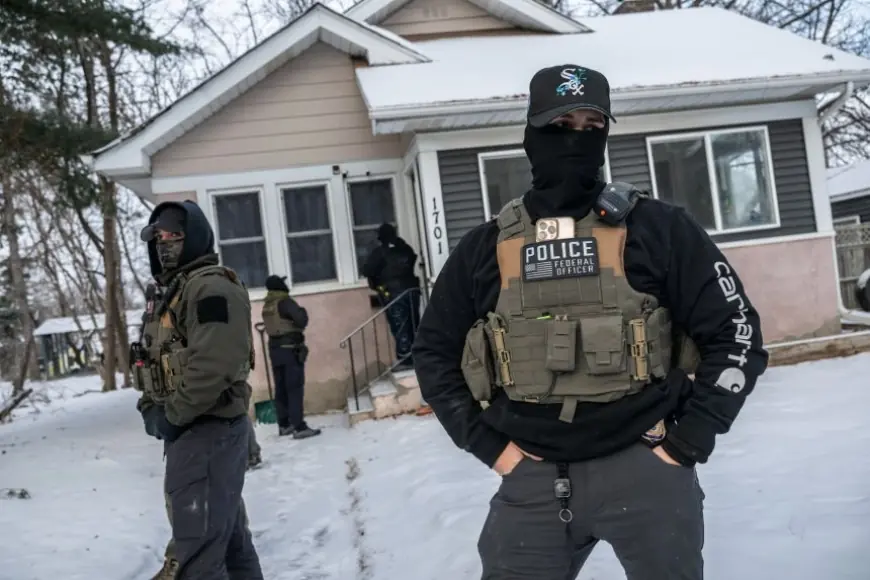
Enforcement posture: A visible surge of federal activity tends to bring more bystanders, more filming, and more rapid crowd formation—sometimes within minutes.
-
Legal escalation: Charging decisions related to protest at a church have introduced a separate, highly combustible question: where authorities draw the line between disruptive demonstration and criminal interference with civil rights.
The result is a city-region where ordinary errands—commutes, worship services, school drop-offs—can collide with high-intensity enforcement and high-intensity response.
What has happened so far, and why the flashpoints keep multiplying
The current wave of unrest traces back to January 7, 2026, when Renee Good was shot and killed during an encounter involving ICE personnel in Minneapolis. Federal officials have publicly identified the shooter as an ICE agent and described the incident as under investigation. Good’s family has disputed elements of the official narrative and has pushed for independent scrutiny, making the case a rallying point well beyond Minnesota.
In the days that followed, tensions did not cool. On January 14, another enforcement-related shooting was reported in Minneapolis, in which a man was shot in the leg. Even without a fatality, the second incident reinforced a perception that the environment on the ground is becoming more volatile—and that split-second decisions are happening in crowded, emotionally charged spaces.
Then came a separate flashpoint: a protest inside a St. Paul church. On January 18, demonstrators disrupted a service at Cities Church after alleging that a pastor held a leadership role within the local ICE structure. The disruption triggered intense political backlash and prompted a federal response that treated the incident as more than ordinary trespass or disorderly conduct.
By January 22, federal agents had arrested three activists tied to the church disruption: Nekima Levy Armstrong, Chauntyll Louisa Allen, and William Kelly. Officials signaled a strategy that frames the conduct as interference with rights in a house of worship, pointing to a federal statute designed to protect access to religious services. The same episode also pulled in a media controversy: Don Lemon, who livestreamed the church disruption, faced an attempt to charge him that was rejected at the initial judicial review stage.
Against that backdrop, organizers have called for broader public actions on January 23, including daytime demonstrations and work-and-shopping disruptions—raising the likelihood of large crowds in sub-zero conditions.
Mini timeline: how Minnesota’s ICE controversy accelerated in two weeks
-
Jan. 7, 2026: Renee Good is fatally shot during an ICE-related encounter in Minneapolis.
-
Jan. 14, 2026: A second reported shooting occurs during an enforcement-related incident in Minneapolis, with a man shot in the leg.
-
Jan. 18, 2026: Protesters disrupt a church service in St. Paul over allegations involving a pastor’s ICE role.
-
Jan. 22, 2026: Federal arrests target three activists tied to the church disruption; a proposed complaint against a journalist is rejected at the initial stage.
-
Jan. 23, 2026: Larger public actions are scheduled, with turnout and policing decisions likely to shape whether the next phase de-escalates or hardens.
What happens next will be shaped less by speeches and more by practical choices: how enforcement operations are conducted in dense public spaces, whether investigators release clear factual findings on the shootings, and whether protest activity shifts away from high-friction venues like worship services.