























Don Lemon and the “Can a Journalist Be Charged?” Test in an Extreme Politics Moment
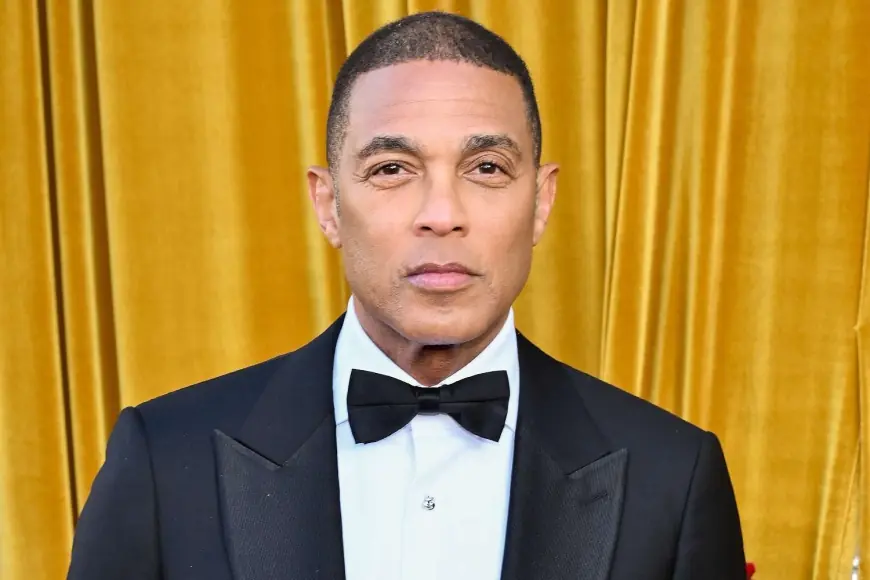
A federal effort to bring criminal charges against journalist Don Lemon has turned into a high-visibility stress test for where the line sits between documenting a protest and taking part in it. The immediate impact isn’t confined to one personality or one case file: it lands on reporters who cover volatile demonstrations, organizers who blur media and activism, and communities already primed to see cameras as either accountability tools or accelerants. For now, a judge’s refusal to approve charges has lowered the temperature—but the uncertainty hasn’t disappeared.
The risk isn’t the headline—it’s the precedent people may take from it
When prosecutors try to attach criminal liability to a journalist’s presence at a protest, the chilling effect can be faster than any final verdict. Newsrooms and independent reporters don’t need a conviction to change behavior; they just need a credible fear that filming the wrong moment in the wrong place could become a legal fight.
This episode has also highlighted a messy reality of modern coverage: livestream-style reporting collapses the old distance between “press” and “crowd.” A camera operator can be physically inside a moving protest, speaking in real time, reacting in real time, and still claim a journalistic function. That gray zone becomes the battleground when the event happens in a sensitive setting—here, a church service that was interrupted by demonstrators protesting immigration enforcement.
The core question that keeps resurfacing: Is the government treating observation as participation when it doesn’t like the message or the venue? The answer depends on facts—what Lemon did, what he said, and whether he encouraged action. But the broader concern is how easily those facts can be argued either way once prosecutors start looking.
What happened in Minnesota, and what the judge did
The dispute centers on a protest that moved into a church in St. Paul, Minnesota, disrupting a service. Lemon was present and broadcast the scene live. Federal officials sought to pursue charges connected to the incident; a federal magistrate judge in Minnesota declined to authorize that initial attempt.
Lemon’s legal team has framed his role as straightforward newsgathering and has signaled an aggressive defense on First Amendment grounds. Federal officials, meanwhile, have indicated a willingness to explore legal theories that treat the church disruption as more than a routine protest—raising the stakes far beyond a typical trespass-style dispute.
Even with the judge’s refusal, the practical reality is that the situation remains live: an initial “no” from a magistrate judge can cool momentum, but it doesn’t automatically end scrutiny if prosecutors keep exploring alternative approaches or additional evidence.
Here’s the sequence as it’s been described publicly, in brief:
-
Jan. 18, 2026: Demonstrators interrupt a church service in St. Paul during an action tied to immigration enforcement issues.
-
Days afterward: Political and legal pressure builds online and in public statements, including calls for prosecution.
-
This week: Federal authorities attempt to bring charges involving Lemon’s presence and coverage.
-
A magistrate judge declines to approve the initial effort to charge him.
-
Next signal: whether prosecutors walk away, narrow their theory, or attempt a different path with a fuller evidentiary record.
Why this has become a flash point beyond one journalist
Two forces collide here: heightened enforcement politics and the increasingly personal nature of protest coverage. When a demonstration enters a private or sacred space, many people instinctively read it as intimidation, not speech. When a journalist is standing inside the same space filming, critics can easily collapse the roles—“covering it” becomes “helping it,” at least rhetorically.
At the same time, press protections are strongest precisely when coverage makes authorities uncomfortable. That’s why this case has attracted attention from free-press advocates: they see a risk that aggressive charging decisions could become a template—one that doesn’t need to be used often to reshape behavior.
For the public, the most concrete takeaways aren’t legal doctrines—they’re practical:
-
For protesters: actions inside sensitive venues invite heavier legal scrutiny, even if the larger message resonates.
-
For reporters: being embedded can strengthen footage but weaken perceived neutrality, which matters when prosecutors argue intent.
-
For institutions like churches: disruptions can trigger political escalation that drags local events into national conflict.
-
For bystanders: the loudest online narratives tend to outrun the actual legal thresholds, creating confusion about what’s illegal versus unpopular.
The judge’s decision has given Lemon a near-term reprieve. The larger question—how far authorities will go to test the boundary between “documenting” and “doing”—is still unresolved, and that uncertainty is exactly what makes the story consequential right now.