

























Vancouver Tops Canada’s List of Most Congested Cities

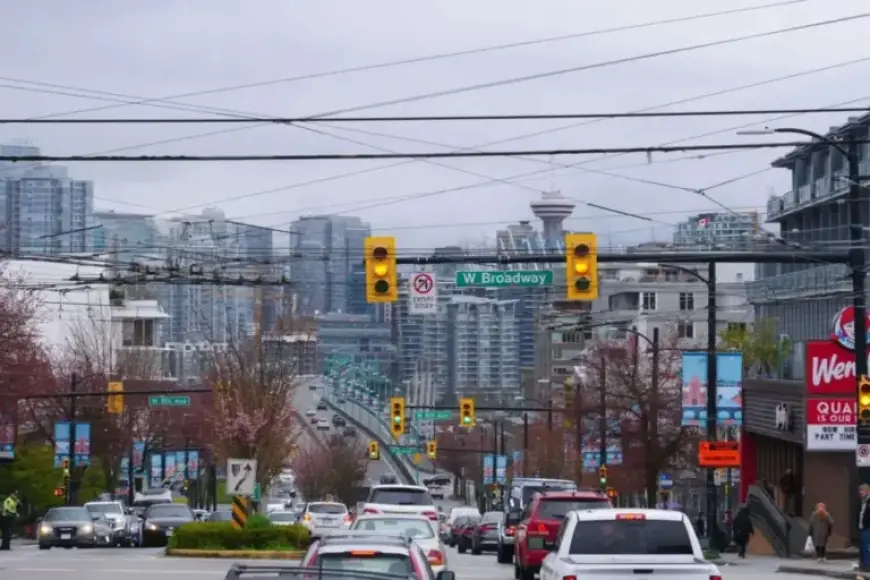
Vancouver has been identified as the most congested city in Canada for the year 2025, according to the TomTom Traffic Index. This ranking places Vancouver among the top 50 most congested cities globally. In North America, it holds the fourth position, trailing behind Los Angeles, Guadalajara, and Mexico City.
Understanding Traffic Congestion Levels
TomTom collected anonymized GPS data across 492 cities, analyzing real driving speeds to evaluate congestion levels. The index calculated congestion by comparing current travel times to benchmark free-flowing travel times. This comparison is expressed as a percentage, showing the additional time spent on the road due to traffic congestion.
Vancouver’s Traffic Congestion Statistics
- Vancouver’s congestion level in 2025 reached 56.5%.
- During morning rush hour, traveling 10 kilometers took an average of 29 minutes and 33 seconds.
- In the evening, the same distance required 35 minutes and 18 seconds.
- Average speeds during morning and evening rush hours were 20.3 km/h and 17 km/h, respectively.
- Metro Vancouver experienced a slight improvement, with average morning speeds of 29.4 km/h and evening speeds of 25.2 km/h.
Comparative Analysis with Other Cities
Vancouver drivers experienced significant time loss due to traffic. In 2025, they lost an average of 112 hours during rush hour. Toronto ranked second in Canada, with drivers losing about 100 hours. Halifax came third, with losses totaling 111 hours.
Canada’s Traffic Congestion Trends
On a broader scale, Canada faces greater congestion than the United States, with congestion percentages of 22% compared to the U.S. rate of 19%. The global traffic scene saw Mexico City at the top as the most congested city, with a staggering congestion level of 75.9%.
Conclusion
Vancouver’s traffic situation illustrates a significant challenge for residents and commuters alike. The rising congestion levels warrant attention and potential solutions to improve travel times throughout the city.