























Amanda Anisimova vs Mirra Andreeva Set for Dubai Quarterfinal Clash as Two Fast-Rising Titles Paths Collide

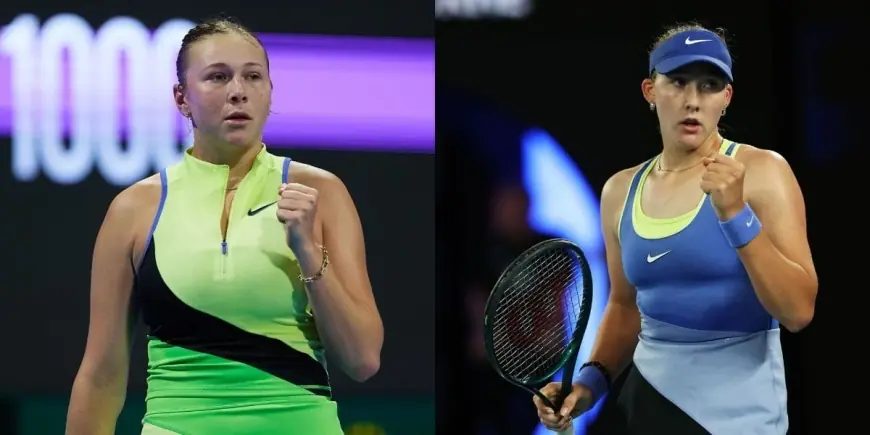
Amanda Anisimova and Mirra Andreeva are on course for a high-leverage quarterfinal meeting in Dubai, a matchup that pairs a polished power game with one of the tour’s most advanced all-court problem-solvers. The stakes are straightforward: a deep run at a major hard-court stop, ranking momentum heading into the next stretch of the season, and a statement win that can reshape how the draw opens up from here.
The quarterfinal is scheduled for Thursday, February 19, with the match listed second on Center Court after the opening quarterfinal. The session start is set for 5:00 AM ET, with start time dependent on the length of the first match.
What happened to set up Anisimova vs Andreeva in Dubai
Anisimova advanced into the last eight with a brisk straight-sets win over Janice Tjen, a performance that reinforced her ability to take time away early in rallies and keep scoreboards moving. Andreeva also progressed into the quarterfinals, continuing a pattern that has defined her rise: she can win even when her timing is not perfect, because she has multiple ways to change the geometry of points.
On paper, it’s a meeting between the No. 6 and No. 7 players in the current singles rankings. In practice, it’s a test of which version shows up under quarterfinal pressure: Anisimova’s first-strike tennis when the lines tighten, or Andreeva’s ability to turn small advantages into suffocating patterns across a full match.
Behind the headline: why this matchup is arriving right now
Context matters. Dubai is the kind of event that rewards players who can do two things at once: hold serve efficiently on a lively hard court and defend well enough to survive the inevitable patches of volatility. Both Anisimova and Andreeva fit that profile, but they arrive there by different routes.
Anisimova’s incentive is clear: when her timing is sharp, she can shorten points and protect her body across a long week. That’s the currency of the biggest hard-court events. For Andreeva, the incentive is strategic development as much as results: every match like this is a live laboratory for how her variety, court coverage, and tactical resets translate against elite pace.
Stakeholders extend beyond the two players. Coaches and teams are tracking whether their patterns hold up under pressure. Tournament organizers benefit from a marquee quarterfinal featuring two recognizable names with contrasting styles. And the rest of the draw is watching because this is the kind of match that can leave a physical and mental tax on the winner, shaping the semifinal landscape.
The tactical pressure points that could decide it
Anisimova’s best path usually starts with return pressure and clean first-ball strikes. If she consistently gets her feet set on second serves, she can tilt games quickly and force Andreeva into more defensive positions than she prefers.
Andreeva’s best path is to make Anisimova hit uncomfortable shots from uncomfortable places. That means changing height, pace, and direction often enough to prevent rhythm. If Andreeva can extend baseline exchanges just a few shots longer than Anisimova wants, she increases the odds of drawing rushed errors or short balls that invite controlled aggression.
A key hinge will be the first-serve patterns from both players. If Anisimova earns free points and short returns, she can keep Andreeva from building the kind of layered rallies that favor the teenager’s adaptability. If Andreeva neutralizes the first strike and repeatedly brings points back to even, the match can become a problem-solving contest where her variety pays dividends.
What we still don’t know
Even with clear stylistic outlines, several pieces remain uncertain until the first few games.
-
How well Anisimova’s timing holds under a quarterfinal spotlight if early chances slip away
-
Whether Andreeva’s serve patterns can avoid predictable looks on break points
-
How each player manages momentum swings, especially after long games or missed set-point chances
-
Any lingering physical issues from the week that have not been publicly confirmed
What happens next: realistic scenarios and triggers
-
Anisimova wins quickly in two sets if her first serve lands at a high rate and her return immediately pressures Andreeva’s service games. Trigger: early breaks and short service holds.
-
Andreeva turns it into a three-set grind if she keeps returns deep and forces Anisimova to hit extra balls from awkward heights. Trigger: extended rallies and multiple deuce games.
-
A momentum-flip match where the player who loses the first set still wins, if the loser makes a clear tactical adjustment. Trigger: a visible shift in return position, rally tolerance, or serve direction.
-
A tight finish decided by late-set serving under pressure. Trigger: one player consistently winning second-serve points in the final stretch.
Why it matters beyond Dubai
This is more than a quarterfinal. It’s a snapshot of where women’s tennis is heading: elite pace meeting elite adaptability, with rankings and reputation moving in real time. For Anisimova, beating Andreeva would validate her ability to impose first-strike tennis deep into big events. For Andreeva, beating Anisimova would underline that she can absorb top-end pace and still dictate outcomes with variety and decision-making.
Either way, the winner exits Thursday with more than a semifinal berth on the line: she leaves with a blueprint that can travel into the next tier of tournaments, where small tactical edges decide the biggest matches.