























flights tenerife: Pilot's haunting final words before deadly 1980 crash

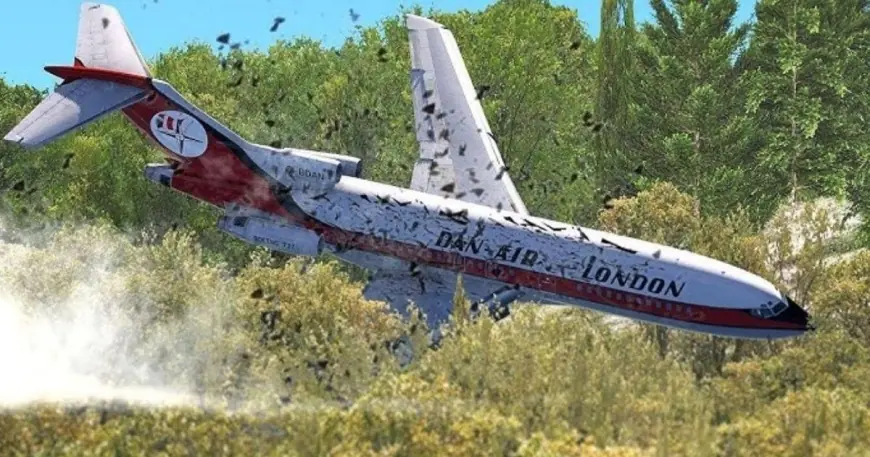
On April 25, 1980, a routine passenger service bound for Tenerife ended in catastrophe. The Boeing 727 operating Dan-Air Flight 1008 struck terrain on the slopes of Mount La Esperanza, killing all 146 passengers and crew aboard. New scrutiny of the chain of decisions that led to the accident underscores how a series of small errors and hazardous conditions combined to produce a fatal outcome.
Holding pattern confusion and the challenge of Tenerife North
Tenerife North sits at roughly 2, 000 feet elevation and is notorious for tricky wind patterns and rapidly changing visibility. On that spring day, unexpected winds forced controllers to divert traffic to Runway 12, a change that complicated approaches and placed multiple aircraft on converging tracks. With no radar available, the air traffic controller at the field had to rely on procedural separation and verbal instructions to manage arriving traffic.
Faced with another aircraft already lined up for the same runway, the controller instructed Flight 1008 to enter a left-hand holding pattern. His phraseology included the words "turn to the left, " but that instruction was not read back by the flight crew. The captain acknowledged with a terse "Roger, " rather than repeating the clearance verbatim. That single missed readback removed a critical confirmation step that might have exposed the mismatch between the crew's understanding and the controller's intent.
Descent, cockpit warnings and final moments
The crew carried out what they believed to be a single left-hand circuit and settled onto a heading that placed the aircraft over rising terrain rather than the expected overwater holding area. As the jet descended below published minima for the sector, confusion increased in the cockpit. One pilot muttered that the holding pattern "doesn't parallel with the runway or anything, " and the captain voiced unease, saying "I don't like that. "
Clearance that followed led the crew to descend further. When the ground proximity warning system activated, the cockpit was filled with the automated alarm commanding "pull up, pull up!" The flight engineer's final recorded words — "let's get out of here" — were followed by frantic exclamations of "bank angle, bank angle!" as the crew attempted abrupt manoeuvres to avoid the slopes. The aircraft struck high ground at about 5, 450 feet elevation, just shy of the summit, disintegrating on impact.
Lessons from the tragedy and ongoing safety implications
Investigations that followed spelled out a chain of human factors and systemic shortfalls: non-standard phraseology, the absence of radar, the lack of an established holding pattern for that runway, and the crew's failure to read back the controller's instructions. Each element on its own might have been manageable; together they produced a perfect storm.
The crash reinforced the importance of strict readback and hearback protocols in ATC communications, robust terrain awareness systems in the cockpit, and standardized procedures for holding patterns and runway changes. It also served as a grim reminder that high-altitude terrain near airports demands conservative altitude discipline during approaches and holds.
More than four decades on, the memory of those final cockpit words continues to resonate in training rooms and safety briefings. For passengers and crew alike, the lessons extracted from that day have shaped modern procedures designed to prevent a similar sequence of missteps from ever being fatal again.