















Cain Velasquez Released on Parole After 2022 Shooting Case, Reigniting Debate Over Vigilante Violence and Victim Protection

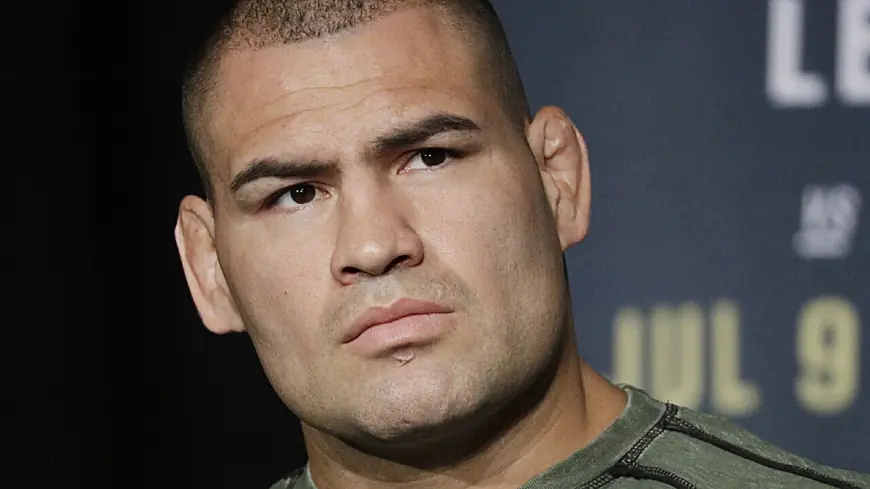
Cain Velasquez, the former heavyweight champion best known for a punishing, wrestling-heavy style and a reputation for discipline outside the cage, has been released on parole after serving the custodial portion of his sentence stemming from a 2022 shooting incident in California. His release, confirmed Sunday, February 15, 2026, ET, closes one legal chapter while reopening a larger public argument about how the justice system handles child-abuse allegations, victim safety, and the impulse toward personal retribution.
Velasquez was sentenced in March 2025 to five years in state prison after entering a no-contest plea to multiple felonies, including attempted second-degree murder and assault with a firearm. He received substantial credit for time already served and time under house arrest, which significantly reduced the remaining time he would spend behind bars.
What happened in the Cain Velasquez case
The case traces back to February 2022, when Velasquez pursued a vehicle carrying a man accused of sexually abusing Velasquez’s young son at a daycare tied to the suspect’s family. During an 11-mile chase, Velasquez fired multiple shots at the vehicle. Authorities say a relative of the accused man, not the accused himself, was struck and injured.
The underlying child-abuse case involving the accused man remains a separate legal matter, with court proceedings continuing. That separation has been a key driver of public confusion and emotional reaction: many people instinctively fold both cases into a single moral storyline, even though they move on different legal tracks, with different burdens of proof and different harms.
Behind the headline: why Velasquez’s release is politically and culturally combustible
Velasquez’s story sits at the intersection of three forces that rarely coexist cleanly.
First is the public’s near-universal outrage at child sexual abuse and the fear that legal processes can feel slow, opaque, or overly technical when families want immediate protection. Second is the justice system’s equally strong imperative to prevent gun violence and protect bystanders, especially in public areas where a chase can turn lethal for people who had nothing to do with the dispute. Third is celebrity: Velasquez’s fame amplifies every detail, shaping public opinion in a way most defendants never experience.
Those incentives point in different directions. Prosecutors tend to frame the case as an unacceptable escalation that endangered the public, regardless of motive. Supporters frame it as a father pushed beyond reason by a perceived failure of the system to keep a child safe. Both frames can be emotionally persuasive, which is why the debate often becomes less about facts and more about which fear people identify with most: fear of predators, or fear of vigilantism.
Stakeholders: who gains, who loses, and who carries the risk
Velasquez and his family now face a new reality: parole conditions, intense scrutiny, and the personal cost of a case that has been public for four years. Even with release, legal stress does not vanish; it transforms into a compliance and reputation problem.
The most important stakeholders remain the alleged child victim and other potential victims connected to the underlying abuse allegations. Their privacy and safety are at risk whenever the case becomes a public spectacle. There is also an extended set of stakeholders that rarely gets attention: the injured bystander in the chase, witnesses who may have been terrified on public roads, and communities that bear the downstream consequences of gun violence even when no one dies.
Law enforcement and prosecutors face institutional pressure too. If they seem too harsh, they risk appearing indifferent to victims of abuse. If they seem too lenient, they risk appearing soft on public endangerment with firearms. Either way, public trust is the currency on the line.
What we still don’t know
Several unresolved or less-clear points will shape how this story evolves in 2026:
-
The final timeline and resolution path of the separate criminal case involving the accused man
-
The extent of restitution obligations, including any scheduled hearings tied to financial damages
-
Whether additional civil litigation expands, settles, or triggers new disclosures
-
How strictly parole conditions will limit Velasquez’s travel, work, and public appearances
Second-order effects: why this case won’t fade quickly
High-profile cases like this can influence behavior well beyond one defendant. They can discourage witnesses from coming forward if they fear becoming targets. They can also intensify pressure on judges and pretrial release decisions in sensitive abuse cases, especially when public anger focuses on how quickly an accused person can return to the community under supervision.
The case also carries a media incentive trap: emotionally simple narratives spread fastest, while the careful distinctions that protect due process and victim privacy spread slowest. That imbalance can distort policy debates, encouraging reactive changes rather than measured reform.
What happens next: realistic scenarios and triggers
-
Velasquez stays largely out of the spotlight while complying with parole. Trigger: strict supervision terms and a desire to reduce risk of violations.
-
A restitution process becomes the next headline. Trigger: hearings that quantify damages and set payment terms.
-
Civil litigation intensifies. Trigger: discovery requests, depositions, or settlement talks that raise new factual disputes.
-
The separate abuse case reaches a major court milestone. Trigger: a trial date, a plea, or significant rulings on evidence.
-
Advocacy groups push new policy proposals. Trigger: renewed debate over pretrial release, victim protections, and monitoring in abuse cases.
Why it matters
Cain Velasquez’s release forces an uncomfortable question into the open: what does society do when moral outrage collides with the rule of law? The legal system is designed to prevent private violence, even when motives are understandable. At the same time, it must prove to families that it can protect children quickly and credibly.
For Velasquez, parole is not an ending. It is a constrained restart. For the public, the case remains a mirror: it reflects how easily fear and anger can turn into irreversible action, and how hard it is to build a justice process that feels both humane to victims and safe for everyone else.