
























Tyreek Hill Released by Miami Dolphins in Major Cap Reset as Injury Recovery and Contract Timing Collide

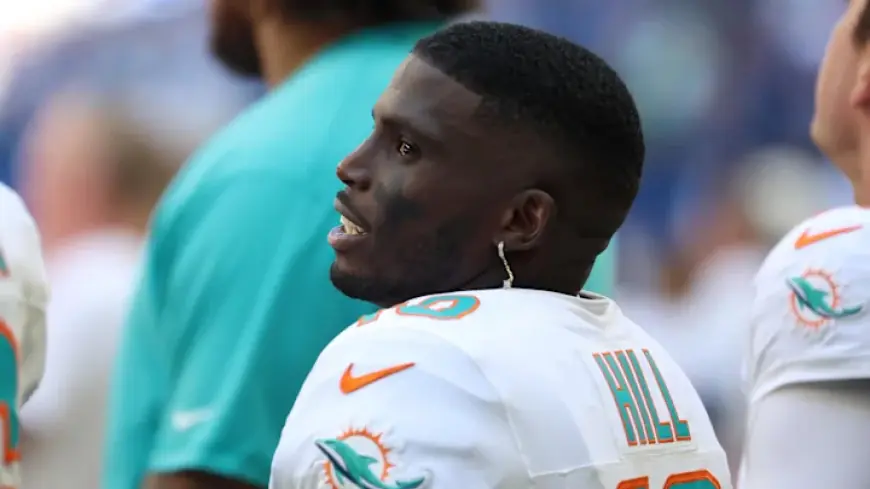
The Miami Dolphins have released wide receiver Tyreek Hill, a sweeping roster decision that signals a sharp pivot toward financial flexibility and a broader retooling ahead of the 2026 league year. The move, made Monday, February 16, 2026, ET, ends Hill’s four-season run in Miami and immediately reshapes the team’s offensive identity while pushing one of the NFL’s most feared speed threats into the open market.
Hill’s release lands at an especially complicated moment: he is rehabbing a serious knee injury that ended his 2025 season after four games. The Dolphins, facing a tight cap picture, opted to take a large one-time accounting hit now to open space going forward rather than carry a massive future charge tied to the final season of his deal.
Tyreek Hill Injury Update: What the Dolphins Are Betting On
Hill is working back from significant knee damage suffered early in the 2025 season. Teams evaluating him will focus less on highlight tapes and more on medical timelines: stability, explosiveness, and confidence cutting at full speed.
For the Dolphins, the injury adds urgency to the financial decision. Elite receivers can age well, but elite speed is a different category, and the front office is effectively saying it would rather buy flexibility than pay premium money while waiting to see how a high-variance recovery looks in real games.
For Hill, the release changes the tone of the rehab. Instead of returning to a familiar system with a defined role, he now has to prove health to a new staff, learn new terminology, and rebuild timing with a new quarterback—often the hardest part for a player whose game depends on precision at max velocity.
Tyreek Hill Contract Fallout: Why Timing Matters
Hill’s release is contract strategy, not a football take alone. The Dolphins free up a large chunk of 2026 cap space by moving on now, even though they still absorb substantial “dead money” from prorated bonuses already paid.
This is the modern NFL’s harsh math: teams can either carry an expensive cap number into a season and hope performance justifies it, or they can rip the bandage off, accept the dead money, and redirect resources to multiple starters instead of one superstar.
The timing is also tied to the calendar. With the new league year set to begin Wednesday, March 11, 2026, ET, front offices try to position themselves with maximum spending power before free agency accelerates. Clearing space in mid-February is a statement that Miami wants options—at receiver, along the line, and potentially across the roster.
Behind the Headline: What Miami’s New Direction Says About the Dolphins
Context: Miami has been living in a win-now window built around explosive offense, star skill players, and a defensive front designed to create chaos. Releasing Hill is a loud admission that the current roster construction became too expensive to maintain, especially with multiple big-ticket deals and injury uncertainty.
Incentives: The Dolphins’ incentive is flexibility—cap room creates choices. Choices create leverage. Leverage turns into either targeted upgrades or the ability to withstand bad breaks during the season. The incentive for decision-makers is also political inside the building: major moves establish authority quickly and reset expectations for what the roster is supposed to be.
Stakeholders:
-
The quarterback and coaching staff, who must replace production and schematic gravity that Hill provided even when he didn’t touch the ball.
-
Other receivers, who now inherit both opportunity and defensive attention.
-
The front office, which must justify losing a marquee name by turning savings into tangible roster gains.
-
Hill himself, whose next contract will be shaped by medical confidence as much as résumé.
Second-order effects: Defenses played Miami differently because of Hill’s presence. Without him, opponents can be more aggressive with coverage leverage and pressure packages. That can raise the burden on protection, route separation from the rest of the receiving group, and play-caller creativity. It can also shift how Miami allocates resources: more emphasis on the line, on a balanced run game, or on acquiring multiple mid-tier weapons instead of a single headliner.
What We Still Don’t Know
Several key questions remain unsettled as of Monday afternoon, February 16, 2026, ET:
-
How Hill’s rehab will look in full-speed workouts, and when he’ll be ready for contact
-
Which teams will be comfortable enough medically to make a strong offer
-
Whether Miami will replace Hill with a premium free agent, a trade, or a draft-first approach
-
How much of the savings will be spent immediately versus carried forward
What Happens Next: 5 Realistic Scenarios for Hill and the Dolphins
-
Hill signs a “prove-it” deal with upside incentives
Trigger: medical evaluations show good stability, but teams want protection against setbacks. -
Hill lands a short, high-value contract with a contender
Trigger: one team believes his speed will return and is willing to absorb risk for a playoff push. -
Miami pivots to volume over star power at receiver
Trigger: the team spreads cap savings across two or three pass-catchers plus protection help. -
Miami leans harder into the run game and quick rhythm passing
Trigger: coaching decides the best way to replace explosive plays is efficiency and pace control. -
The market moves slowly until teams see Hill run at full speed
Trigger: franchises delay major offers until verified workouts reduce uncertainty.
Why It Matters in NFL News Right Now
Tyreek Hill’s release isn’t just a roster transaction—it’s a referendum on how quickly an NFL window can shift when injuries and cap math collide. For the Dolphins, it’s a bet that flexibility and depth will beat star-driven volatility in 2026. For Hill, it’s the beginning of a new negotiation where health, fit, and timing will matter as much as his past production.