
















Men’s hockey Olympics: Team USA plays on while honoring Johnny Gaudreau

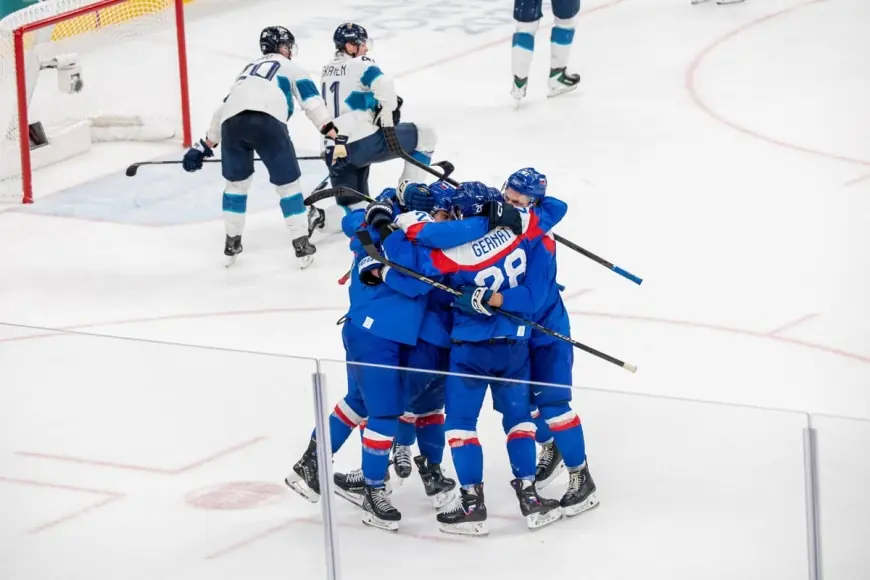
The men’s hockey tournament at the 2026 Winter Olympics has shifted into its elimination phase with the United States unbeaten through group play and carrying an added emotional weight: a visible tribute to the late Johnny Gaudreau that has traveled with the team through Milan-Cortina. The gesture has become a touchpoint inside a roster packed with NHL stars, as the games tighten and the margins for error disappear.
Men’s hockey Olympics bracket tightens
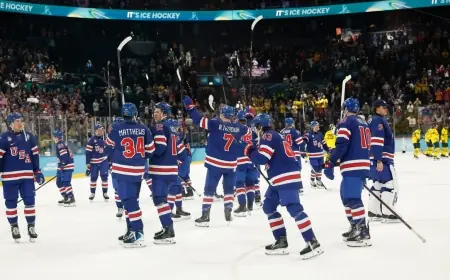
Group play wrapped up Sunday, Feb. 15, 2026 (ET), and the U.S. moved straight into the quarterfinal round after finishing 3–0 in Group C. A 5–1 win over Germany in the group finale pushed the Americans into the knockout stage without needing an extra qualification game, but it did not secure the top overall seed.
The seeding came down to goal difference, and Canada’s late group surge kept the U.S. from the No. 1 position. For the Americans, the bigger takeaway is structural: avoiding Tuesday’s single-elimination qualification games reduces injury exposure and buys an extra day to reset legs and lines before the quarterfinals.
The jersey tribute to Johnny Gaudreau
Inside Team USA’s setup, Gaudreau’s No. 13 has been displayed as a locker-room reminder and carried as a symbol through the tournament. It’s a simple visual that does two things at once: it honors a player who was a long-time fixture in USA sweaters, and it gives teammates a shared focal point during a high-pressure run.
Gaudreau and his brother, Matthew, died in late August 2024 after being struck while bicycling. Police said at the time that the driver was suspected of being under the influence, and charges were filed. The case remains a painful marker for many players around the program, particularly those who shared dressing rooms with him in recent international events.
The tribute has also shown up in personal ways — a sweatshirt here, a quick locker-room moment there — the kind of details that rarely change tactics but can sharpen purpose when games are decided by one shift.
What Sunday’s win over Germany showed
The U.S. win over Germany was a snapshot of why this roster is dangerous: depth scoring, pace, and the ability to turn a short burst into a multi-goal gap.
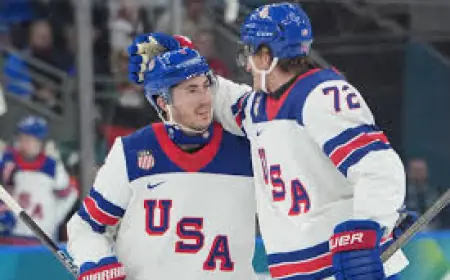
Auston Matthews scored twice, and the Americans got additional goals from Zach Werenski, Brock Faber, and Tage Thompson. Beyond the names, the pattern mattered. The U.S. controlled large portions of the game at five-on-five, limited clean looks for long stretches, and still found ways to extend the lead without needing special-teams fireworks.
Germany managed a late goal that trimmed the margin, but the game never truly swung. For the U.S., the performance was less about style points and more about staying efficient — the trait that tends to travel best when the bracket turns single-elimination.
NHL return raises the stakes in 2026
This Olympic tournament marks the first time since 2014 that the men’s field has been filled with NHL players, following a finalized agreement announced in mid-2025. That shift has changed the texture of the event immediately: fewer “catch-up” games, more star power on every line, and a higher baseline of speed and structure.
It also changes how teams manage momentum. With elite players on the ice, a short lapse can become a two-goal hole quickly — and a two-goal lead can evaporate just as fast. The U.S. has benefited from that talent bump, but it also means the quarterfinal round offers no soft landings.
What’s next for Team USA
The schedule now splits the field into two tracks:
-
Tuesday, Feb. 17, 2026 (ET): qualification playoff games (single-elimination) determine the remaining quarterfinalists
-
Wednesday, Feb. 18, 2026 (ET): quarterfinals begin, with the top seeds waiting for Tuesday’s winners
For the U.S., the immediate task is part scouting, part maintenance: keep legs fresh, sharpen details on breakouts and neutral-zone tracking, and be ready for an opponent that arrives battle-tested from a do-or-die game.
The Gaudreau tribute won’t decide any faceoffs or power plays, but it has clearly become part of the team’s emotional rhythm. As the medal rounds approach, the Americans are trying to pair that meaning with the most practical requirement of Olympic hockey: playing clean, fast, and mistake-light when the season ends in a single night.