



















Nancy Guthrie Missing in Arizona: Reward Raised to $100,000 as Investigators Zero In on Masked Suspect and Key Backpack Clue

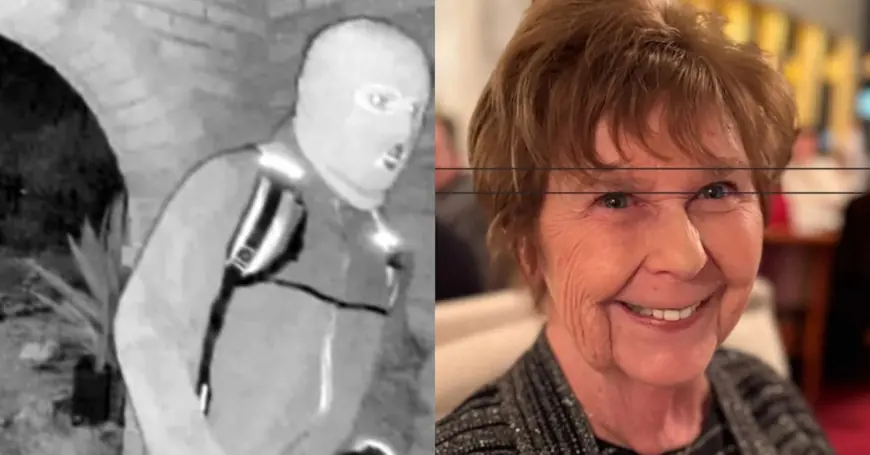
The search for Nancy Guthrie, 84, remains active as of Saturday, February 14, 2026 (ET), with federal authorities increasing the reward to $100,000 for information that leads to her location or an arrest. Guthrie, the mother of a prominent morning television anchor, disappeared from her home in the Catalina Foothills area near Tucson in the overnight window between January 31 and February 1. Investigators say the circumstances point to an abduction and have released images and video stills of a masked person seen near the home.
What makes the case unusually urgent is a mix of time sensitivity and ambiguity: officials say Guthrie needs daily medication, but there has been no confirmed proof-of-life released publicly.
Nancy Guthrie update: what investigators say happened
Authorities have described the case as an apparent forced disappearance. Blood believed to match Guthrie was found at the scene, and video from a front-door camera captured a masked individual outside the home. A key detail being circulated by investigators is a black hiking-style backpack, described as roughly 25 liters, which they believe may be linked to the suspect.
The suspect description being shared publicly centers on a male of average build, approximately 5 feet 9 inches to 5 feet 10 inches tall, wearing a mask and appearing armed in imagery released to the public. Officials have asked residents to submit any home or business surveillance video from the surrounding area from late January into early February.
Has Nancy Guthrie been found?
No. As of February 14, 2026 (ET), authorities have not announced that Nancy Guthrie has been found. Search efforts have continued across the Tucson-area foothills and beyond, with investigators sorting through a flood of public tips.
Rio Rico, Arizona and the detention that did not lead to charges
One major development in recent days involved a traffic stop and detention in Rio Rico, Arizona, where a man was questioned and his residence searched. That person was later released without charges. The episode has fueled intense online speculation and waves of misidentification, even as law enforcement has cautioned against turning rumors into “suspects” without evidence.
A separate name circulating widely is Carlos Palazuelos, identified in media reports as the man detained and released. Public reporting indicates he has denied involvement. Authorities have not publicly named him as a suspect, and there has been no announced arrest tied to him.
Dominic Evans, “person of interest” chatter, and why online theories keep spreading
Another name repeatedly pushed online is Dominic Evans, sometimes framed in social media posts as a “person of interest” based on personal connections and amateur comparisons to surveillance images. At this stage, officials have not publicly tied Evans to the investigation. The way the rumor spread follows a familiar pattern in high-profile missing-person cases: a partial clue, a widely shared image, and the internet’s tendency to fill gaps faster than investigators can.
Behind the headline, this matters because misinformation changes behavior. It can generate a blizzard of low-quality tips, waste investigative time, and expose uninvolved people to harassment, while also making genuine witnesses less willing to come forward.
The backpack clue and what it signals about the investigation
The focus on the backpack is not random. In many abduction investigations, an identifiable object can become the most practical thread to pull: it’s something a witness might remember seeing on a trail, in a parking lot, or at a convenience store. It also gives investigators a way to narrow video canvassing: they can search for a specific silhouette and size profile across doorbell footage, traffic cameras, and business security systems.
The second-order effect is that the backpack detail can also cause false positives. Hiking packs are common in southern Arizona, so investigators typically rely on a combination of indicators, not a single item.
Tension between local and federal agencies becomes part of the story
In the past 24 hours, a public dispute has emerged over forensic handling, specifically where certain physical evidence is being processed. Local authorities have defended sending items such as gloves for analysis through an established private laboratory relationship, while reporting indicates federal officials preferred routing evidence through the national federal lab system.
Why this matters: delays in DNA and trace evidence processing can reshape the timeline of an investigation, especially when there is only one clear suspect image and no identified vehicle or confirmed route of travel. Even if the agencies are cooperating operationally, perceived friction can erode public confidence and complicate messaging, which is crucial when investigators rely on tips.
What we still don’t know
Several core questions remain unresolved:
-
Whether investigators have a confirmed direction of travel after the suspect left the home area
-
Whether any ransom communications are authentic and linked to the case
-
Whether the suspect acted alone or had logistical support
-
Whether there are additional surveillance angles that clearly show a face, vehicle, or weapon detail
-
The timeline for lab results tied to gloves and other recovered items
These missing pieces are the hinge points that determine whether the case shifts from a broad search to a targeted manhunt.
What happens next: realistic scenarios and triggers
-
Video breakthrough: A new clip shows the suspect entering a vehicle or moving toward a recognizable location, triggered by expanded camera canvassing.
-
Forensic match: DNA or trace evidence links a specific individual to the scene, triggered by lab processing and database comparisons.
-
Tip prioritization shift: A high-quality tip places the suspect or Guthrie in a defined area, triggered by corroboration from multiple independent witnesses or video.
-
Arrest without recovery: Investigators identify and arrest a suspect based on evidence, but Guthrie’s location remains unknown, triggered by a strong forensic or digital trail.
-
Expanded search footprint: Officials broaden ground and air searches beyond the immediate foothills area, triggered by credible sightings or data indicating movement south or east.
Why the Nancy Guthrie story matters
At its core, this is a time-sensitive missing-person investigation with an elderly victim, a visible suspect image, and a large public attention footprint. The reward increase signals investigators believe public participation could still crack a key gap: identifying the masked person or locating the moment the suspect transitioned from foot movement to vehicle travel. The next decisive development is likely to come from either a clean piece of video that reveals more than a silhouette, or a forensic result that turns a viral image into a named suspect.