





















Kazakhstan Sets March Referendum on New Constitution Expanding Presidential Powers

Kazakhstan will hold a nationwide vote on March 15 on a sweeping new constitution that reshapes the political system, expands presidential authority, and recalibrates the role of the Russian language. Officials frame the document as the product of broad public input, while critics describe an accelerated, tightly managed process marked by pressure on dissenting voices.
What the draft would change
The proposed basic law would overhaul state institutions. The current bicameral parliament would be replaced by a single-chamber legislature elected entirely through party lists, a model that analysts and activists warn could sideline smaller opposition movements. A new People’s Council, fully appointed by the head of state, would gain the power to propose legislation, further entrenching presidential influence over the lawmaking agenda.
Presidential authority would grow in several areas. The office would gain broader appointment powers and, for the first time, the ability to name a vice president as part of a revamped executive continuity and succession framework. The draft also permits the president to issue decrees with the force of law if parliament is dissolved. While the text formalizes judicial procedures, critics argue that executive control over key appointments means the courts would not be genuinely independent.
A push for legitimacy through consultation
Authorities say the document reflects an inclusive process that began in early October and culminated in the public presentation of the draft on January 31. A special commission engaged legal experts, held public hearings, and reviewed more than 10, 000 proposals submitted through online platforms and civil society channels. “By its essence, this is a new constitution, ” President Qasym-Zhomart Toqaev said recently. “Any changes must reflect the will of our citizens. ” A lawmaker asserted that citizens back the overwhelming majority of provisions, claiming support for 98 percent of the draft.
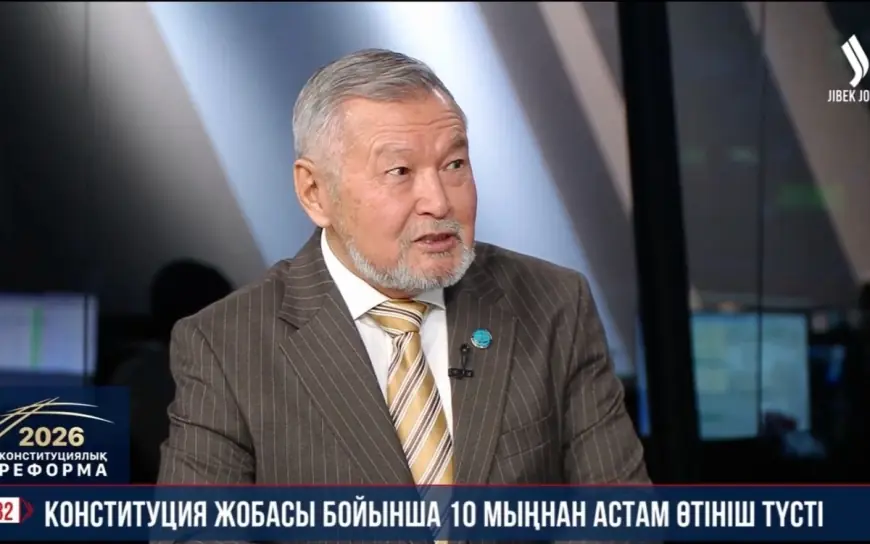
Prominent legal voices contest that narrative, calling the national discussion more performative than participatory. “What is presented as national discussion is, in reality, a performance. Participation is symbolic, ” veteran legal expert Maidan Suleimenov said, arguing that the text serves the convenience of those in power rather than the will of the people. The short window between the draft’s unveiling and the March 15 vote has further fueled skepticism about the depth of public deliberation.
Pressure on dissenting voices
Concerns about the climate for debate intensified after the detention of activist Ermek Narymbay on February 4 for social media posts criticizing the draft; he was jailed for two months. Other activists and journalists have faced police summons, warnings, and pressure to remove content under directives targeting “false information. ” Rights advocates say such measures chill open discussion in the final weeks before the referendum.
Language and identity at the forefront
The status of language—long intertwined with questions of identity and sovereignty—has emerged as the most sensitive point. Article 9 of the draft reaffirms Kazakh as the state language while maintaining the official use of Russian in state bodies. On February 10, the Constitutional Commission shifted one Russian-language phrase from stating that Russian is used “on equal footing” with Kazakh to “along with” Kazakh. Officials described the change as an editorial clarification to align the Kazakh and Russian versions. Commentators who have parsed the phrasing, however, argue the tweak subtly reduces Russian’s implied standing.
For many citizens, the wording carries heavy symbolism in a country where Russian remains prevalent in cities and public institutions. Some activists contend the draft still falls short of fully elevating Kazakh. “The ambiguous language prevents full use of Kazakh in public life, ” civic campaigner Serik Aliuly said, reflecting a broader push to strengthen the state language more explicitly.
Supporters highlight rights, secularism, and digital safeguards
Proponents point to a cluster of provisions that center individual rights. The draft places protection of life, rights, and freedoms at the core of the state’s responsibilities and foresees compensation for harms caused by inaction or unlawful pressure from public bodies. It also codifies a clearer separation between religion and the state through a new article that bars religious associations from interfering in public governance while restricting state interference in religious affairs to narrow cases involving threats to national security, public order, or fundamental rights.
Other sections emphasize strengthening education and science and, in a first for the country’s legislation, include a clause stating that digital technologies must not harm human rights. Supporters cite these points as evidence that the charter is “of the people, ” shaped by proposals gathered from citizens, civil society groups, and legal experts. Discussions are also under way that could lead to adjustments to the national observance of Constitution Day.
What to watch next
With the referendum set for March 15, attention now turns to voter turnout, the margin of approval, and the speed of implementation. If endorsed, the changes would usher in a new institutional design, including the creation of a presidentially appointed People’s Council, the transition to a party-list legislature, and the possibility of appointing a vice president. The language debate—especially the balance between Kazakh and Russian—appears certain to remain a flashpoint well beyond the vote. Civil society groups warn that the space for free discussion in the run-up to the referendum will shape public confidence in both the process and the outcome.