















Harvey Levin says third letter claims to identify Nancy Guthrie kidnapper as Bitcoin activity draws fresh leads

Harvey Levin said Wednesday, Feb 11, 2026 (ET) that his newsroom received a third letter in the Nancy Guthrie case, this one claiming to know who abducted the 84-year-old and seeking 1 Bitcoin for that information. The development came as separate on-chain activity tied to an earlier ransom demand was observed Tuesday, Feb 10 (ET), potentially offering investigators new avenues even as the search broadened and a man briefly detained was released without charges.
New letter lands, seeks 1 Bitcoin for “identity” of kidnapper
Levin, the longtime television host and attorney, disclosed that a fresh letter arrived early Wednesday claiming to identify the kidnapper and requesting payment of 1 Bitcoin — roughly $70,000 at recent prices — in exchange for the name. The note referenced a valid-format Bitcoin address. The correspondence mirrors earlier messages that sought cryptocurrency and asserted control over the missing Tucson-area grandmother.
Officials have not authenticated any of the letters. No public evidence has been released to show a direct link between the writers and the abduction, and there remains no named suspect in the case.
On-chain activity tied to earlier demand draws scrutiny
Separate from the new letter, activity was recorded Tuesday (ET) at a Bitcoin address listed in a recent ransom note. The address itself has not been shared publicly. Because Bitcoin transactions are broadcast and permanently recorded on a public ledger, any funds moving into or out of that address — as well as the sending and receiving addresses — can be viewed by anyone using standard blockchain explorer tools.
While a Bitcoin address does not, by itself, reveal the owner’s identity, blockchain forensic techniques can sometimes surface clues. Transactions that touch a third-party service, such as a wallet provider or exchange that holds customer records, may become investigative touchpoints. None of this, however, confirms that the address is controlled by the kidnapper, and the authenticity of the correspondence referencing it remains unverified.
Search intensifies; detained driver released without charges
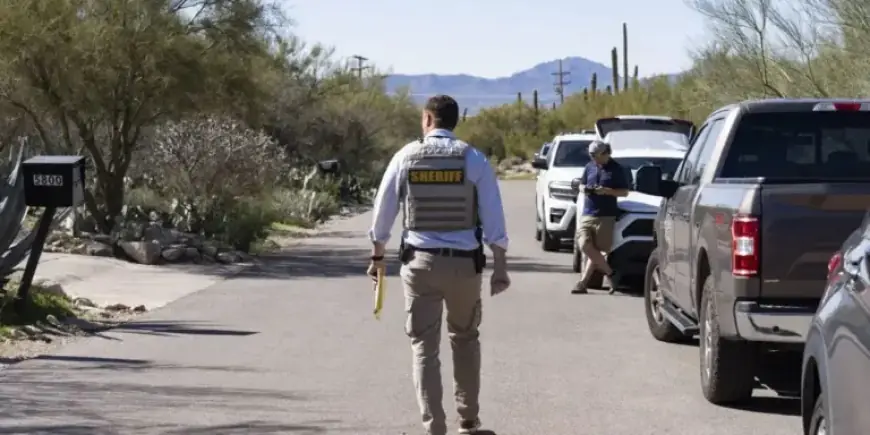
Investigators widened their footprint across southern Arizona this week. A driver stopped near the U.S.–Mexico border on Tuesday was released after questioning early Wednesday (ET) and has publicly stated he had no connection to the case. Overnight, a court-authorized search was executed at a property in Rio Rico, roughly 60 miles south of Tucson; that search concluded early Wednesday (ET). Authorities have not named a suspect or person of interest.
Teams of federal agents and local deputies continued canvassing multiple neighborhoods, knocking on doors, combing desert terrain, and processing a high volume of tips. The hunt enters its 12th day on Thursday, Feb 12 (ET), after Guthrie’s family discovered she was missing on Feb 1 and alerted law enforcement.
Masked figure on porch video; focus turns to backpack and other clues
Recently released images from Guthrie’s porch show a person wearing a mask, gloves, and a backpack tampering with the doorbell camera the night she vanished. The individual’s face is largely obscured, save for the eyes and mouth area. The footage has become a focal point for the public and investigators alike, with attention on the suspect’s build, gait, clothing, and the backpack style.
Analysts are also scrutinizing whether the pack matches a widely sold, mass-market hiking model. Even if a match is established, such gear is ubiquitous and may only serve as one piece of a larger evidentiary puzzle. The video itself remains the clearest visual reference point to date, but it does not show the abduction or indicate the suspect’s identity.
Family pledges to pay; community rallies as case reaches Day 12
In a video message shared by her children, Savannah Guthrie said, “we will pay,” underscoring the family’s willingness to meet ransom demands to secure their mother’s safe return. Neighbors have placed yellow flowers and written notes of hope around the community.
Investigators have urged residents in and around the Tucson area to review and share home-surveillance footage from specific dates and times that could capture relevant vehicles or individuals. Multiple teams continue door-to-door outreach as temperatures climb, adding to the challenges of ground searches.
What a Bitcoin trail can reveal — and where it falls short
Cryptocurrency can serve both as a hindrance and a help in cases like this. On one hand, Bitcoin’s ledger is transparent: every transfer is public, time-stamped, and traceable across addresses. That visibility can illuminate patterns, intermediaries, and potential off-ramps where funds might interact with services that maintain user data.
On the other hand, addresses are pseudonymous, and sophisticated actors can layer transactions, move funds through mixers, or convert into other assets to obscure origin and destination. A single address, absent corroborating evidence, does not establish who controls it. Any credible information about an address or payment path is best routed directly to investigators, who can combine blockchain clues with warrants, subpoenas, and traditional detective work.
For now, the case remains fluid: a new letter seeking 1 Bitcoin, fresh on-chain activity linked to an earlier demand, no confirmed suspect, and a community still searching for answers as the investigation presses on.