
























Winter Olympic injury focus intensifies ahead of Milan-Cortina 2026, with sliding-track safety under renewed scrutiny

Friday, Feb. 13, 2026 ET — With the next Winter Games drawing closer, a fresh look at injury patterns across Olympic disciplines is sharpening attention on the sports that place athletes at the greatest risk. The approaching return to Europe’s mountains and ice tracks has also revived the safety conversation around high-speed sliding events, an area indelibly marked by the death of Georgian luger Nodar Kumaritashvili in 2010.
The riskiest events: speed, contact and airtime
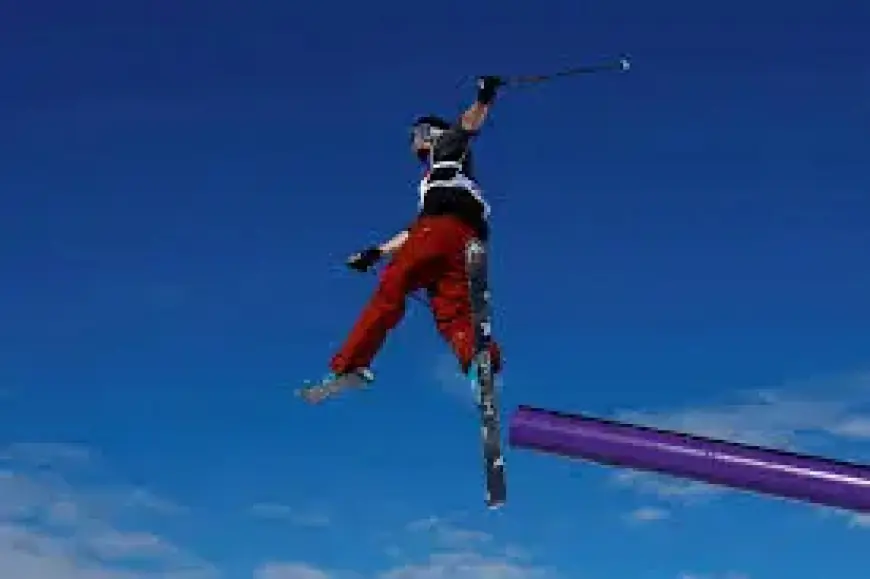
Injury trends across recent Winter Games point to a consistent hierarchy of risk. At the top are contact-heavy contests and disciplines built on sheer speed or aerial amplitude. Ice hockey, with its collisions and unforgiving boards, frequently accounts for a significant share of concussions, fractures and shoulder injuries. Alpine skiing—particularly downhill and Super-G—pushes athletes to highway speeds on hard, variable surfaces, elevating the likelihood of knee ligament damage and high-energy crashes. Freestyle skiing and snowboarding, especially halfpipe, slopestyle and boardercross, add the danger of big jumps, rotations and midair contact, where awkward landings can produce concussions, wrist fractures and knee trauma.
Short track speed skating, deceptively perilous despite its compact oval, presents pileup risks at blistering pace with blades that can cause deep cuts. Sliding sports—luge, skeleton and bobsled—bring extreme velocity on banked ice tracks where even minor errors can translate into heavy G-forces and severe impacts.
Sliding-track stakes: lessons that still shape the Games
The legacy of Nodar Kumaritashvili remains central to the safety framework in sliding disciplines. His fatal crash during a training run at the Vancouver 2010 track prompted an industry-wide reckoning over track design, start heights, protective barriers and training protocols. For many athletes and officials, the memory is not only a somber reminder but also a call to relentless vigilance as new venues come online and competitive standards evolve.
In the years since, organizers and teams have emphasized incremental, not just reactive, improvements: clearer track sightlines, refined ice preparation, enhanced crash padding and more conservative initial training speeds for athletes stepping onto new tracks. Those measures sit alongside stronger helmet standards and sled control education that begins well before Olympic qualification.
What’s improved in safety—and what remains challenging
Across high-risk disciplines, equipment and course design have advanced. Helmets now better manage rotational forces. Snow venues favor smoother landings and better-maintained takeoffs. In ice sports, protective gear has improved while rule tweaks aim to reduce dangerous contact. Just as important, medical teams have embraced rapid on-site evaluation with stricter return-to-play protocols after head impacts and joint injuries.
Yet fundamental pressures persist. Faster speeds and bigger tricks remain central to the spectacle. Denser competition schedules and travel add fatigue. And for sliding sports, small miscalculations at high speed can still carry outsized consequences despite robust safeguards. The balance between progression and protection continues to define the edge of modern winter sport.
Inside the numbers: why some sports carry higher risk
Patterns visible across multiple Games reveal why certain events dominate injury ledgers. More speed means harder crashes. Airtime introduces unpredictable landings and torsional forces on knees, ankles and spines. Head-to-head formats concentrate athletes in tight spaces, increasing collision potential. And sharp equipment—from skate blades to sticks—can transform minor falls into serious lacerations.
Injury tracking has also improved. Stricter medical reporting captures issues that once went unrecorded, from overuse strains building through a season to concussions that previously went undiagnosed. As data quality rises, the industry is better positioned to refine course setups, training progressions and protective gear in response.
Milan-Cortina outlook: preparation, venue design and athlete readiness
As Milan-Cortina 2026 approaches, safety planning is moving in lockstep with venue finalization. Organizers and teams are expected to maintain conservative training ramps on new or modified courses, particularly at sliding and freestyle venues, and to stage repeated track and course inspections to account for evolving weather and ice conditions. Medical response units will aim for rapid deployment with clear evacuation routes and enhanced neuromonitoring for suspected concussions.
For athletes, off-season preparation remains the first line of defense: targeted strength and balance training, neck conditioning for G-loads in sliding sports, knee stabilization work for jump-heavy disciplines, and sport-specific protective equipment such as wrist guards for snowboarders. Disciplined run counts, informed risk assessments and timely rest can reduce error rates when competitive stakes are highest.
An enduring mandate
The modern Winter Games have grown safer even as performance boundaries have stretched. That progress was forged in response to hard lessons, including the tragedy that claimed Nodar Kumaritashvili. As the spotlight shifts toward Italy, the mandate is clear: keep pushing the engineering, medical and coaching advances that allow athletes to perform at their limit while ensuring the protections around them keep pace.