



















Men’s singles takes center ice at the 2026 Winter Olympics as Malinin targets history

With the ice dance medals awarded on Feb. 11 ET — France taking gold, the United States silver and Canada bronze — the focus of Milan–Cortina now pivots to the showpiece of the rink: the men’s singles event. The narrative is unmistakable. A 21-year-old American with boundary-pushing difficulty, Ilia Malinin, arrives as the skater to beat, trailed by a hungry field led by Japan’s Yuma Kagiyama.
The spotlight shifts after ice dance finale
The rhythm of the figure skating program has set a crisp tone for the second week. Ice dance concluded with the French duo atop the podium, the U.S. in second and Canada third on Feb. 11 ET, underscoring how slim the margins can be at this Games. That intensity now transfers to the men’s short program, where minimal errors can rewire the entire leaderboard ahead of the free skate.
Malinin’s arsenal is changing the sport
Malinin’s reputation is built on not just difficulty, but unprecedented difficulty. He remains the only skater to land a quadruple Axel cleanly in competition — the forward-takeoff jump that adds an extra half rotation beyond other quads. The gap this can create on the technical score is decisive if he delivers under Olympic pressure.
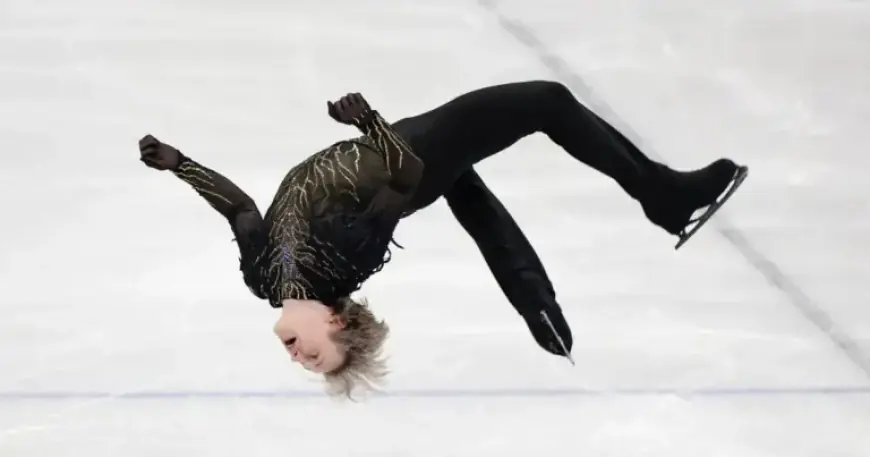
His trajectory this week has reinforced that aura. In the team event free skate on Feb. 8 ET, Malinin cleared the 200-point barrier as the lone skater to do so on the night, stacking five quads and holding the execution level across the program. He even added a flashpoint for the history books: the first legal backflip performed at the Olympics in half a century, completed on a single-foot landing. The skill, re-permitted in 2024, demanded not only showmanship but control — a calculated risk that paid off inside a high-base-value program.
Key challengers and the short‑program equation
There is a path to gold that does not run through Malinin — but it likely requires surgical precision. Kagiyama showed as much earlier in the week by nipping him in the team short program after Malinin’s miscues. The blueprint from Japan’s star is clear: stack quality grades of execution on top-tier but sustainable content, then pounce if the door opens. That strategy has won medals at past Games and World Championships, and it travels well under pressure.
Beyond Kagiyama, expect contenders from powerhouses with depth to test the top six. The short program remains the tournament’s trapdoor. One missed combo or under‑rotation shifts skaters out of striking distance with little time to claw back. Conversely, a clean skate with sharp component scores can slingshot a contender into the final flight for the free skate.
How the math could decide the medals
Two levers will likely determine the podium: base value and risk management. Malinin’s peak layout — especially if it features the quadruple Axel — builds a technical ceiling that others simply cannot match element-for-element. But the scoring system also rewards cleanliness and second-half construction. If Malinin throttles back content to manage risk, he can still win by out-executing a slightly trimmed set. If he swings for the fences and hits, the TES margin can become unassailable.
For the chasers, the path is steadiness: pristine spins, clear levels on steps and choreographic sequences, and high-grade quads landed without edge or quarter calls. Transition density and musical command can squeeze out crucial program component points that keep pressure on the leader into the back half of the free skate.
Momentum from the team event sets a fierce tone
The men’s race unfolds under the glow of a razor-thin team competition, where the United States edged Japan by a single point for gold earlier in the week. That result highlights how every element — from a spin level to a GOE bullet — can swing a medal. It also underscores how much a single skater can shape a team’s outlook when they land at full force.
Put simply, the Olympic ice is rewarding ambition paired with control. Men’s singles now inherits a stage primed for statement skates. If Malinin maintains the composure he showed in the team free — whether or not he unveils the quadruple Axel — he enters as the clear favorite. If the door opens, Kagiyama and a tight pack have the tools to stride through.
The next 48 hours will answer the defining question of 2026 Winter Olympics men’s figure skating: can history’s most difficult technician convert otherworldly potential into Olympic gold under the brightest lights?