
























USS Gerald R. Ford Redirected From Caribbean to Middle East, Extending Deployment Into Spring

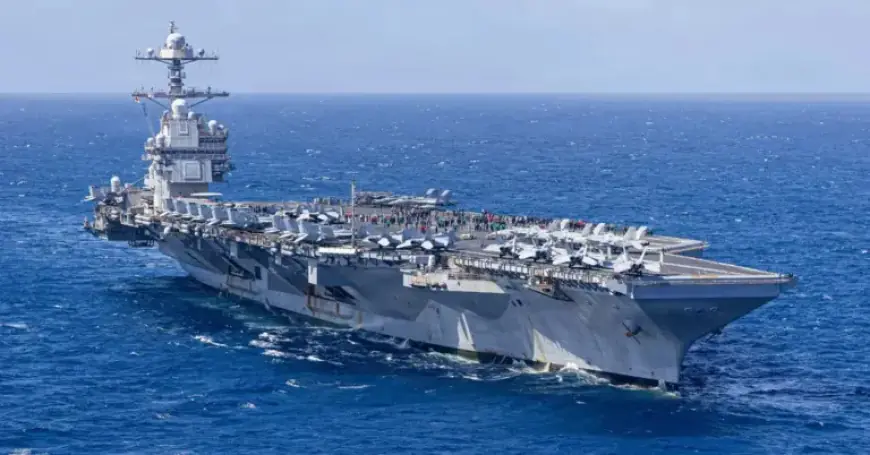
The United States is redirecting the aircraft carrier USS Gerald R. Ford and its escort ships from the Caribbean to the Middle East, with the strike group now expected to remain at sea until late April or early May ET. The move places a second carrier alongside the USS Abraham Lincoln as Washington intensifies military pressure on Iran while keeping diplomatic channels open.
Orders Shift Carrier From Venezuela Mission to Gulf Presence
The Ford strike group received new orders on Thursday ET, realigning a deployment that began on June 24 with an originally planned European cruise before being rerouted to the Caribbean. The carrier’s warplanes took part in the Jan. 3 operation in Caracas that resulted in the capture of President Nicolás Maduro, a centerpiece of the pressure campaign targeting Venezuela’s leadership. The latest tasking now sends the Navy’s newest carrier toward the Persian Gulf to bolster a reinforced U.S. maritime posture.
The USS Abraham Lincoln arrived in the region more than two weeks ago with three guided-missile destroyers. With the Ford’s arrival, the United States will field two carrier strike groups and their accompanying warships, a signal of deterrence aimed at Iran’s leadership amid ongoing efforts to negotiate constraints on Tehran’s nuclear and missile activities.
Crew Notified as Homecoming Slips to Late April or Early May
Sailors aboard the Ford were informed Thursday ET that the deployment—already extended once—will run roughly two months longer than the early March return many had anticipated. The decision underscores the escalating demands on carrier crews, whose schedules can be reshaped rapidly by emerging crises and evolving White House priorities. Extended deployments strain personnel and logistics planning across the Navy, from aviation maintenance cycles to shipboard supply lines.
The Ford’s escort ships will continue integrated operations with the carrier, maintaining air defense, anti-submarine, and surface warfare screens as the group transits toward the theater. Once on station, the strike group is expected to conduct deterrence patrols, maritime security operations, and air tasking as directed by regional commanders.
Diplomacy and Deterrence Move in Tandem
The expanded carrier presence follows the president’s recent public signaling that additional military assets could be directed to the Middle East even as indirect talks with Iran proceed. After a Thursday ET meeting with Israel’s prime minister, the president reiterated a preference for a diplomatic outcome and said discussions with Tehran would continue. He later rejected the notion that outside pressure would derail negotiations, adding, “I’ll talk to them as long as I like, and we’ll see if we can get a deal with them.”
U.S. and Iranian officials held their first round of indirect talks since last year in Oman last week, with both sides indicating a willingness to stay on the diplomatic track. Tehran has warned Washington against allowing third parties to undercut the process. The administration has framed the two-carrier deployment as a means of strengthening leverage while talks unfold.
Operational Ripple Effects for the Navy’s Newest Carrier
The Ford’s prolonged time at sea introduces new uncertainties for the ship’s upcoming maintenance period in Virginia, where a scheduled dry dock is set to deliver upgrades and repairs. Large-deck carriers rely on tightly sequenced maintenance, training, and deployment cycles. Any slippage in yard periods can cascade through the fleet, prompting reshuffles of future deployment schedules and adjustments to aviation squadron plans tied to the carrier’s flight deck availability.
As the strike group’s return timeline moves deeper into the spring, planners will have to contend with the availability of shipyard resources, parts deliveries, and crew rest windows. Navy officials routinely emphasize that maintenance discipline is a foundation of readiness for high-tempo operations like dual-carrier deterrence patrols.
What Comes Next
The Ford will depart the Caribbean and proceed toward the Middle East, where combined operations with the Lincoln strike group can expand air coverage, broaden surveillance and reconnaissance capacity, and allow rotational rest and refit at sea for escort ships. The bolstered naval footprint is designed to deter escalatory moves by Iran and reassure regional partners while leaving space for a diplomatic agreement the president has said could be reached quickly if terms are met.
For the sailors aboard, the message on Thursday ET brought clarity to weeks of uncertainty, along with a reminder of the unpredictable rhythm of carrier duty. For U.S. policy in the region, the redeployment blends pressure and negotiation—an effort to keep the door to talks open while demonstrating the ability to surge combat power if needed.