





















Nancy Guthrie Update: Search Intensifies in Arizona as Investigators Focus on Disabled Camera, Blood Evidence, and New Neighborhood Video Requests

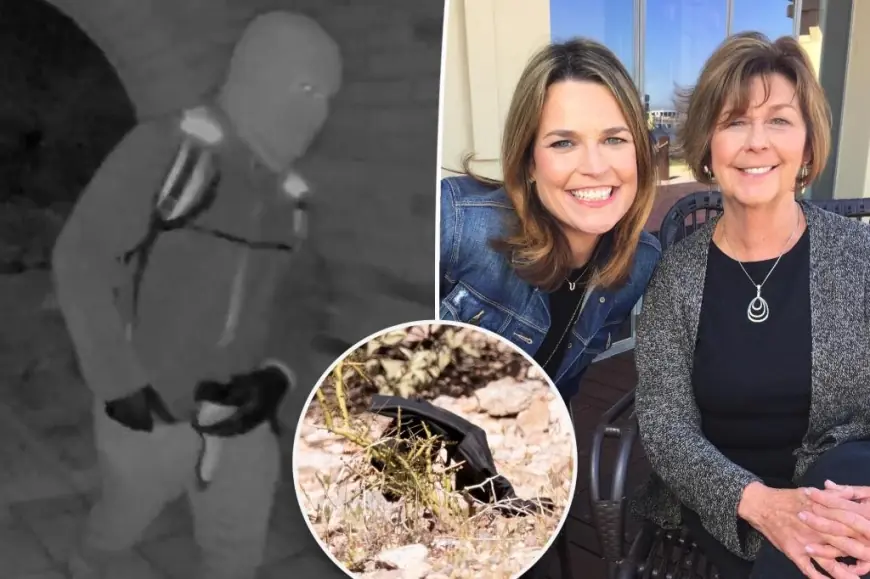
The search for Nancy Guthrie, the 84-year-old mother of television host Savannah Guthrie, entered a critical phase on Thursday, February 12, 2026 ET, as investigators signaled they are pressing forward despite forecasted rain that could complicate outdoor evidence recovery. Authorities have confirmed that blood found at Guthrie’s home belongs to her, deepening concerns that she did not leave voluntarily and sharpening the urgency around a case that has quickly become one of the most closely watched missing-person investigations in the United States this month.
Guthrie was reported missing on Sunday, February 1, 2026 ET, after she did not appear for church services. Since then, the investigation has broadened to include federal support and a growing stream of digital leads tied to doorbell-camera activity, wearable-device connectivity, and neighborhood surveillance footage.
What happened: the key facts investigators are working from
Investigators have described a sequence that suggests Guthrie returned home the night before she vanished and that something unusual occurred in the early hours.
A home camera captured Guthrie arriving at approximately 11:48 p.m. ET on Saturday, January 31. Later, at about 3:47 a.m. ET on Sunday, February 1, the same system appears to have been disabled. Around that period, her pacemaker and connected devices reportedly stopped transmitting as they normally would, raising concern that she may have been moved or that her devices were deliberately interrupted.
In the most significant confirmation to date, law enforcement has said blood found on the home’s porch was Guthrie’s. Officials have not publicly detailed what that indicates about injuries or timing, but they have treated it as evidence that demands an intensive search and careful forensic follow-up.
On Thursday morning, February 12 ET, investigators also briefly erected a privacy tent at the home’s entrance for roughly 90 minutes, a step often associated with collecting or preserving sensitive evidence near a primary scene.
Behind the headline: why this case escalated so quickly
Missing-person cases become national stories for two reasons: unusual evidence and public visibility. This case has both.
The evidence—blood at the residence, a disabled home security camera, and abrupt connectivity loss from medical technology—creates a pattern that investigators must treat as potentially coercive rather than accidental. Separately, the family’s public profile amplifies attention, which can generate tips but also raises the cost of missteps for everyone involved.
For law enforcement, the incentive is speed and preservation: rain, time, and public activity can degrade physical traces and corrupt the timeline. For the family, the incentive is pressure and visibility: public appeals can prompt someone to come forward, but they also invite rumors and opportunistic false leads.
Neighborhood video requests: the practical hunt for a timeline
A major development on February 12 ET was a renewed push for neighborhood camera footage during specific time windows. Residents near Guthrie’s home have been asked to review and submit video covering targeted periods, including a late-evening window earlier in January and the hours surrounding January 31.
This reflects how modern investigations increasingly hinge on building a minute-by-minute map: vehicles passing, pedestrians, light patterns, door openings, and anything that can anchor a suspect’s movement or confirm Guthrie’s last known activity. In cases where the primary camera appears to have been disabled, the surrounding “ring” of cameras—neighbors, street-facing systems, business lots—can become the replacement record.
What we still don’t know: missing pieces that matter most
Despite the intensity of the search, several critical questions remain unresolved:
-
Whether there is confirmed surveillance of Guthrie after she arrived home on January 31
-
Whether investigators have identified a suspect or vehicle of interest beyond generalized descriptions
-
Whether any communications tied to the case are verified, including any ransom-related claims circulating publicly
-
The precise medical implications of interrupted device connectivity and whether it indicates movement, damage, or simple loss of signal
-
Whether the blood evidence suggests an injury at the scene or transfer from another location
These gaps are important because they shape resource decisions: broad-area searches versus targeted warrants, door-to-door canvassing versus digital forensic emphasis, and public tip campaigns versus quiet investigative moves.
Second-order effects: why pressure is building beyond the search area
This investigation is already affecting more than one household. It is changing local behavior—neighbors reviewing footage, altering routines, and tightening security—and it is also increasing scrutiny of how medical devices and home systems can become both safety tools and vulnerabilities.
There is also a broader reputational effect: when a case appears to involve someone disabling a camera and potentially interfering with medical technology, it heightens public fear and can spur political demands for stronger penalties or improved emergency-response integration for vulnerable seniors.
What happens next: likely scenarios and triggers
-
A break from video evidence
Trigger: neighborhood footage captures a suspicious vehicle, a person approaching the home, or movement matching the key overnight window. -
A forensic pivot
Trigger: lab results from items collected at the scene produce DNA, fingerprints, or trace evidence that narrows suspects. -
A targeted search zone emerges
Trigger: investigators identify a directional clue—license plate reads, cell-location signals, or witness sightings—that concentrates the hunt. -
A communications breakthrough
Trigger: verified contact is made that confirms Guthrie’s status and location or provides actionable proof-of-life details. -
The investigation becomes weather-driven
Trigger: rain forces a short-term pause on certain ground-search tactics, shifting effort to interviews, warrants, and digital reconstruction.
Where the case stands now
As of Thursday, February 12, 2026 ET, the investigation remains active and urgent, with authorities signaling determination to continue fieldwork even as weather threatens to complicate searches. The confirmation that the blood at the home is Guthrie’s has raised the stakes, and the focus on disabled cameras and neighborhood footage underscores what investigators appear to believe: the answer likely sits inside a narrow window of time, and someone—whether a witness, a neighbor with video, or an involved party—may hold the missing piece that turns this from a search into a resolution.