
























Panel Rules VAR Penalty Award to Chelsea at Crystal Palace Unjustified

Recent discussions around the Premier League have focused on a controversial penalty awarded to Chelsea during their match against Crystal Palace. Chelsea triumphed 3-1 at Selhurst Park, but the circumstances surrounding their penalty have raised significant debate.
Panel Rules VAR Penalty Award to Chelsea Unjustified
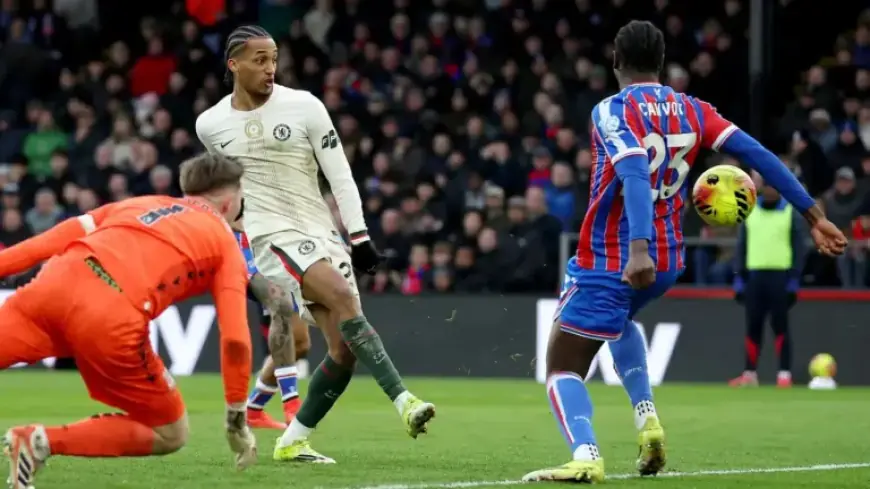
In the match, Chelsea was leading 2-0 when Joao Pedro’s shot was blocked by Jaydee Canvot’s arm. Initially, the on-field referee, Darren England, did not call a penalty, allowing play to continue. However, following an intervention by VAR official Matt Donohue, England reviewed the incident and reversed his decision to award a penalty.
Enzo Fernandes converted the penalty, adding a third goal for Chelsea. However, the Key Match Incident (KMI) Panel, comprising five experts—three former players or coaches and officials from PGMO and the Premier League—reviewed the decision and concluded that the penalty was unwarranted.
Findings of the Key Match Incident Panel
- The KMI Panel unanimously agreed that the original call for no penalty was correct.
- Canvot’s arm was not in an unnatural position, and he did not make his body appear larger.
- A deflection off Canvot’s hip occurred before the ball struck his arm, providing additional context.
This decision has drawn parallels with another incident from a recent Brentford match against Newcastle. In that case, Jacob Murphy’s arm was similarly close to his body when he blocked a goal-bound shot, but the penalty was awarded by the on-field referee without VAR intervention.
The Subjectivity of Handball Decisions
These incidents highlight the ongoing difficulties surrounding handball interpretations in football. The definition of what constitutes a handball varies significantly between competitions. In UEFA matches, referees are guided to award penalties routinely when the ball contacts a defender’s arm. Conversely, the Premier League allows referees more discretion. Key considerations include:
- Whether the ball struck the arm directly or after a deflection.
- If the defender’s arm was in a natural position.
- If the defender moved their arm towards the ball.
This season, the Premier League aims for a “less is more” approach, encouraging leniency with non-deliberate handball offenses. This shift stems from discussions among clubs and fans who are seeking clarity and consistency in officiating.
Historical Context of Handball Rules
The evolution of handball regulations in football has seen significant changes over the decades. Originally, players could catch the ball until handling rules were completely restricted in the early 1870s. Variations continued to shape the game, leading to the establishment of the modern interpretation of handball.
Adjustments to the handball law typically occur annually, governed by the International Football Association Board (IFAB). Today, understanding what defines “the arm” is critical, with clear guidelines provided in the Premier League handbook.
The discussions following the controversy over the penalty awarded to Chelsea reflect broader issues within the sport. Consistency and clarity in officiating remain key concerns for all stakeholders in football.