
























Lindsey Vonn injury update after Olympic crash: stable condition following two operations

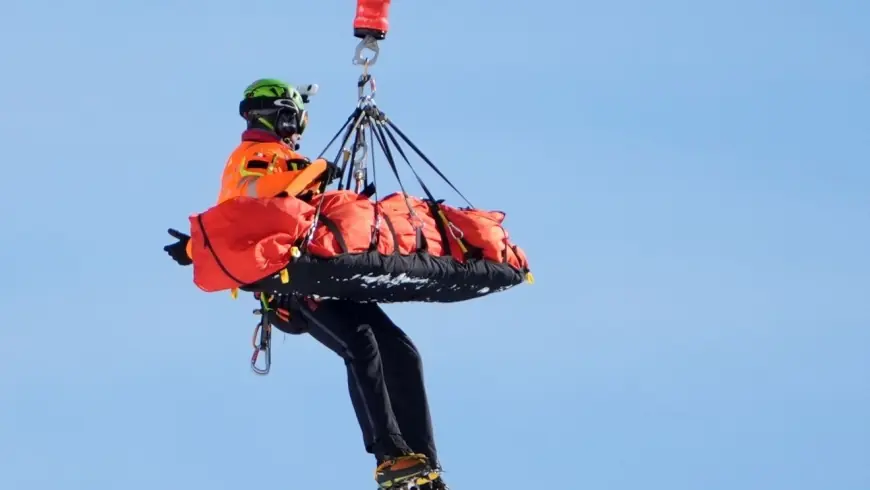
Lindsey Vonn’s long-awaited Olympic return ended abruptly Sunday, Feb. 8, when she crashed just seconds into the women’s downhill in Cortina d’Ampezzo and was flown by helicopter to a hospital in Treviso. In the hours that followed, surgeons performed procedures to stabilize a fracture in her left leg, and early updates indicated her condition remained stable as doctors monitored swelling and circulation.
The incident instantly shifted the storyline of the alpine program: from a comeback narrative to urgent questions about recovery, athlete risk, and how a single mistake at downhill speed can change everything.
What happened in the crash
Vonn’s run ended roughly 13 seconds after the start, when her equipment became tangled with a course marker and she lost balance at speed. She slid hard and remained on the ice for several minutes while medical personnel attended to her. A helicopter evacuation followed, with on-mountain coverage showing a visibly serious response before she was transported offsite for further evaluation.
Downhill racing is the fastest discipline in alpine skiing, with small line changes and split-second reactions often determining whether an athlete stays upright. The margin for error is especially thin on an Olympic track built to reward aggression.
Surgeries and current condition
Hospital and team officials indicated Vonn underwent two operations in Italy to address the injury to her left leg. The initial focus was stabilizing the fracture. A second procedure involved additional work intended to reduce the risk of complications tied to swelling and blood flow—an issue doctors watch closely after high-impact lower-leg trauma.
As of midday Monday, Feb. 9, 2026, ET, officials described her as stable and under the care of both American and Italian medical staff. Specific details such as the exact fracture pattern, any ligament involvement beyond her earlier knee issue, and a firm rehabilitation timeline were not publicly confirmed in full.
The ACL backdrop that shaped the risk conversation
The crash landed in the middle of a heated debate that had already been building around Vonn’s decision to race after a recent ACL injury in the same leg. In the days leading up to the downhill, she had been described as determined to compete despite the setback, prompting scrutiny over how fitness-to-race decisions are made at the highest level.
In elite ski racing, the line between “cleared to compete” and “ready to withstand the demands of downhill” can be complicated. Even when an athlete can ski, the sport’s intensity can expose any limitation—strength, stability, reaction time, or tolerance for impact—at the worst possible moment.
Reactions from teammates and the wider sport
The immediate response from within the alpine community was a mix of shock and familiar resignation: crashes are part of downhill, but the severity is never routine. Fellow competitors and prominent athletes from other sports offered public messages of support as news of the surgeries spread.
Within the U.S. team environment, the emotional whiplash was especially sharp because the event continued after the stoppage, and the medal outcome became intertwined with concern for Vonn’s condition. Teammates referenced her competitiveness and resilience, while acknowledging the toll that watching a major injury can take on athletes preparing to race the same course.
What recovery may look like from here
With complex leg injuries, the early phase is often about stabilization and preventing secondary complications—then comes the long arc of rehabilitation. Once swelling is controlled and surgeons are satisfied with healing progress, athletes typically move into staged recovery: restoring range of motion, rebuilding strength, and eventually reintroducing sport-specific load.
For Vonn, the path back to skiing will depend on factors not yet fully detailed publicly: the fracture’s location and severity, soft-tissue involvement, and how her earlier knee injury factors into weight-bearing and stability work. Any return-to-snow timeline remains unclear at this time.
What it means for the rest of the Games
Vonn’s exit removes one of the most recognizable names from the alpine schedule and alters the narrative around the U.S. women’s speed group. It also refocuses attention on course safety and the reality that Olympic downhill can punish even minor mishaps.
In the near term, updates are expected to center on postoperative progress, mobility, and whether additional procedures are needed. Longer term, the key question will be whether her body can recover enough to consider competition again—or whether this crash becomes the final chapter of a comeback attempt that was always going to demand exceptional risk tolerance.
Sources consulted: Reuters, Associated Press, ABC News, The Guardian