
























(Updated) surgery details.. Lindsey Vonn airlifted after Olympic downhill crash that ended in seconds

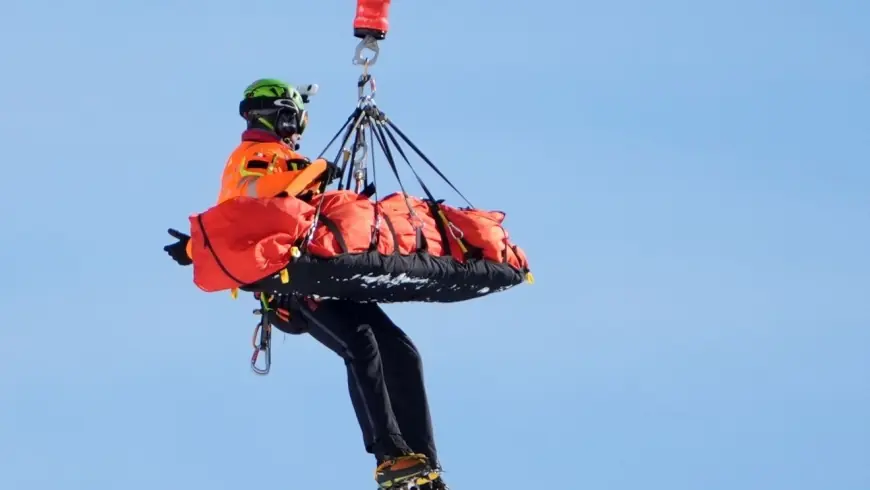
Lindsey Vonn’s Olympic women’s downhill ended almost immediately Sunday, February 8, 2026, after the American lost control within roughly the first 13 seconds of her run in Cortina d’Ampezzo and went down hard near the top of the course. Medical teams reached her quickly, and she was evacuated by helicopter for treatment—an abrupt, frightening moment that overshadowed an already crash-marked race.
Later Sunday, officials confirmed Vonn underwent orthopedic surgery to stabilize a left-leg fracture and was reported to be in stable condition. The injury ends her downhill start at these Games and raises major questions about whether she can compete again during the Olympic fortnight.
What happened on the course
Vonn pushed out of the start gate and, moments later, appeared to clip a gate and lose her line. She slid and tumbled before coming to a stop, remaining on the snow while ski patrol and medical personnel assessed her. The event was paused as responders worked, and the tone at the finish area visibly shifted from competitive tension to concern.
The crash happened so early that it preceded many of the course’s faster, more committing sections—an uncomfortable reminder that in downhill, there is almost no “settling in” period. A small error at speed can turn into a violent impact instantly.
Airlift, hospital transfer, and surgery
After on-slope treatment, Vonn was airlifted from the venue to a nearby hospital for evaluation. She was later transferred for additional care and underwent surgery to stabilize a fracture in her left leg.
Officials said she was stable following the procedure. No public recovery timetable was provided, and detailed specifics on the exact bone and severity beyond “left-leg fracture” were not fully released in the immediate aftermath.
The injury context that made her start a flashpoint
Vonn’s crash didn’t land in a vacuum. She entered the Olympic downhill under a cloud of concern because she had recently described racing with a significant left-knee injury, including an ACL rupture, sustained in a late-January crash. Downhill skiing places heavy loads on the knees and lower body: repeated vibration, compressions, jumps, and quick corrections at high speed.
That backdrop has reignited a debate that surfaces whenever a star returns at the Olympics while less than fully healthy: how athletes weigh legacy, closure, and competitive possibility against the risk of worsening injuries that can affect life after sport. The crash does not confirm her pre-existing knee injury caused the fall, but it shaped how viewers interpreted the decision to start.
A race overshadowed—yet still historic for Team USA
The women’s downhill continued after delays and additional incidents, but the day remained shadowed by multiple crashes. Despite the disruption, the United States still left with a defining Olympic moment: Breezy Johnson won gold in 1:36.10, edging Emma Aicher by 0.04 seconds, with Sofia Goggia taking bronze.
Johnson’s victory became Team USA’s first medal of the 2026 Games, creating a stark contrast inside the same event: celebration at the podium and concern for a teammate taken away for surgery.
Timeline of key developments
| Moment | Time (ET) | What it meant |
|---|---|---|
| Downhill run ends | Early morning | Crash within seconds of the start |
| On-slope medical response | Immediately after | Treatment and stabilization on course |
| Helicopter evacuation | Shortly after | Transport for urgent evaluation |
| Surgery confirmed | Later Sunday | Left-leg fracture stabilized; condition stable |
Vonn’s next chapter now depends on medical detail that isn’t fully public yet: the fracture’s specifics, how her knee responds during recovery, and whether continuing at these Olympics is medically viable at all. For now, the clearest facts are stark: her downhill ended in seconds, she was airlifted for care, and she underwent surgery while listed in stable condition.
Sources consulted: Reuters, Associated Press, PBS NewsHour, U.S. Ski & Snowboard