
























Terrance Gore, famed MLB pinch-runner and three-time ring winner, dies at 34

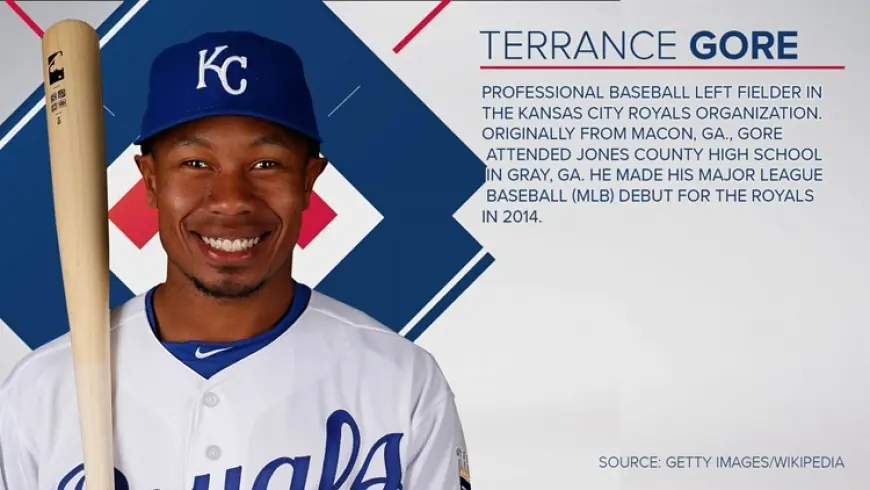
Terrance Gore, the former Major League outfielder whose career became synonymous with late-inning speed and postseason pinch-running, has died at age 34. A social media post from his wife said he died on Friday, Feb. 6, 2026 (ET), following unexpected complications from what was described as a routine surgical procedure.
Gore played parts of eight MLB seasons and built a rare résumé: modest plate appearances, outsized October impact, and a role so specialized that managers kept finding reasons to carry him when margins were thinnest.
A specialist who changed games with one sprint
Gore’s calling card was simple and devastating: get on base late, steal a bag, force a rushed throw, score on a single. He was widely regarded as one of the fastest players of his era, often used almost exclusively as a pinch runner. That role can be thankless—one bad jump or one slip can define a month—but Gore made it valuable enough that contending teams repeatedly found space for him.
In the postseason, the payoff was clear. Over 11 career playoff games, he logged just two plate appearances, yet still stole five bases and scored three runs. That is the purest version of October baseball math: a player who might touch the ball twice with a bat can still be directly involved in turning a one-run game.
The unusual career arc: Kansas City and a recurring October call
Gore reached the majors with Kansas City in 2014 and quickly became part of a blueprint that helped normalize the “designated runner” concept in modern roster construction. He was drafted in the 20th round in 2011 and climbed through the system as a speed-first player, eventually earning the kind of major-league utility that isn’t captured by traditional counting stats.
His most visible early chapter came with Kansas City’s playoff runs, where the club leaned on speed, defense, and relentless pressure. Gore’s reputation grew as he delivered in the exact moments when one base can swing a series.
Later, he moved between organizations and continued to be valued in the same way: as a late-season addition and an October chess piece. He also spent time with Chicago, Los Angeles, Atlanta, and New York, often joining teams with postseason ambitions.
A ring collection that matched his niche
Gore’s career is remembered not only for what he did, but for when he did it. He was part of three championship seasons, earning rings with:
-
Kansas City (2015)
-
Los Angeles (2020)
-
Atlanta (2021)
Even when he didn’t appear frequently, his presence reflected how seriously teams treat the final few outs of playoff games. In a sport where rosters are built around power and pitching, Gore proved that elite speed can still be a weapon worth reserving a spot for—especially when every run is contested.
The numbers that tell his story
Gore’s stat line looks unconventional because his job was unconventional. Across 112 regular-season games, he recorded only 85 plate appearances, but stole 43 bases (on 52 attempts) and scored 33 runs. In other words, when he got on, he moved—often into scoring position without needing a hit behind him.
Defensively, he saw limited innings in the outfield, but his teams valued the option of speed plus coverage late in games. His career batting line was light, and he did not hit a major-league home run, but that wasn’t why he kept getting called.
His most enduring “stat,” in many ways, is the feeling opponents had when he reached first base in the eighth inning: immediate urgency, quick pickoff attempts, and infielders edging toward the bag a half-step earlier than usual.
Reaction and what comes next
News of Gore’s death prompted a wave of tributes from teammates, fans, and baseball communities tied to the clubs he served. The grief has carried a particular sting because his identity in the sport was built around youth, explosiveness, and a role that relies on being physically sharp.
At this stage, details beyond the family’s statement remain limited. What is clear is that Gore’s career left a distinct mark on the way teams think about roster edges in October. The “pinch-running specialist” is no longer an oddity; it is a credible, repeatable choice—partly because Gore showed what that skill can be worth.
A legacy measured in moments
Terrance Gore won’t be remembered for towering home runs or 200-hit seasons. He’ll be remembered for the opposite: the smallest margins. A stolen base that turned a single into a run. A late substitution that forced a mistake. A sprint that changed a dugout’s mood.
In the modern game, few players have embodied a single tool as completely, or made it as relevant when the stakes were highest.
Sources consulted: MLB Trade Rumors, Baseball-Reference, MLB.com, ESPN