


















Sonny Jurgensen, Hall of Fame quarterback and Washington icon, dies at 91

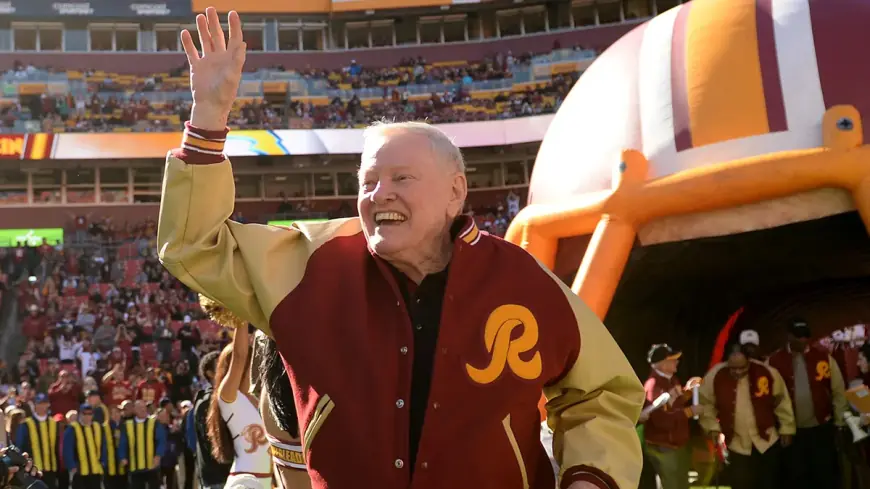
Sonny Jurgensen, the strong-armed quarterback whose easygoing personality made him a defining figure for two NFL franchises and for generations of Washington football fans, died on Friday, Feb. 6, 2026, at 91. His family said he died of natural causes in Naples, Florida, after a brief stay in hospice care.
Jurgensen’s legacy stretches well beyond statistics. He helped reshape pro passing in the 1960s, became a permanent part of Washington’s football identity as the face of its offense, and later spent decades as a broadcaster whose voice was as familiar as his old No. 9 jersey.
A prolific passer in the game’s transition era
Jurgensen arrived in the NFL when passing was still treated as a complement to the run, then spent much of his career proving it could be an engine. He played 18 seasons as a quarterback, first with Philadelphia and later with Washington, and routinely produced yardage totals that stood out in an era far less friendly to quarterbacks than today.
He led the league in passing yards five times and finished his career with 32,224 passing yards and 255 touchdown passes, marks that placed him among the most productive passers of his generation. Even on teams that were often inconsistent overall, Jurgensen’s arm talent and willingness to attack downfield made him must-watch.
From Philadelphia champion to Washington cornerstone
Jurgensen began his pro career in Philadelphia and was part of the club’s 1960 championship team. In 1964, he was traded to Washington, where he became the franchise’s enduring quarterback standard—someone fans talked about as much for his flair as his numbers.
One of the most remembered performances came in 1965, when he threw for 411 yards and three touchdowns in a comeback win over Dallas, a game often cited as a snapshot of his ability to turn chaos into points with a few throws.
Washington never reached a championship game during his playing time there, but his brilliance kept the team relevant and helped set a template for the franchise’s offensive identity for years.
Career snapshot
| Category | Mark |
|---|---|
| NFL seasons | 18 |
| Passing yards | 32,224 |
| Passing TDs | 255 |
| Times led league in passing yards | 5 |
| Pro Football Hall of Fame | Inducted 1983 |
The broadcaster who stayed close to the game
After retiring as a player, Jurgensen didn’t drift away from football. He became a long-running part of Washington’s radio booth, known for a conversational style and a sharp quarterback’s eye for what a play was trying to become—and why it failed when it did.
For many fans, the sound of Washington football included Jurgensen as naturally as the crowd noise. He remained in the broadcast role until 2019, maintaining a connection to the franchise and its audience across multiple eras, coaches, and stadium changes.
Honors, jersey retirement, and a lasting identity
Jurgensen’s place in football history was cemented long ago, but the more local tributes continued to arrive even decades after his final snap. He was honored among Washington’s all-time greats and was widely regarded as a franchise cornerstone—an athlete whose best years came before the team’s modern peaks but whose status never faded.
In 2023, Washington retired his No. 9 jersey, a formal recognition of what was already true culturally: Jurgensen’s name had become shorthand for elite quarterback play in the city.
What his death means for the football community
Jurgensen’s death lands as more than the passing of a former star. It marks the loss of a bridge to an earlier version of the sport—when quarterbacks took heavier hits, offenses were less protected by rules, and a fearless deep ball could redefine an entire afternoon.
For Washington fans in particular, he represented continuity: first as the player who could win games with his arm even when the roster around him was incomplete, and then as the familiar voice who narrated Sundays for decades. In the coming days, attention is likely to turn to public memorial plans and team tributes as the league and the two franchises he served reflect on the career of one of pro football’s most distinctive passers.
Sources consulted: Associated Press, Pro Football Hall of Fame, Washington Commanders, Philadelphia Eagles