








Connections Today Answer for February 7, 2026: Dice Pips, Math Symbols, Punctuation, and Lowercase Letters Take Over Puzzle 972

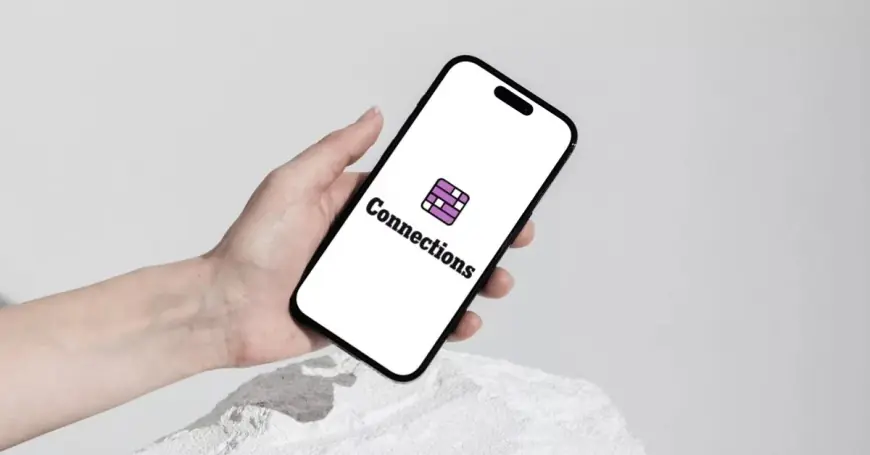
The Connections today answer for Saturday, February 7, 2026 in Eastern Time delivers a theme-heavy grid that looks deceptively simple until you realize it’s built to tempt you into the wrong grouping. Puzzle 972 leans on symbols, notation, and “things that look like other things,” which is exactly the kind of design that can wreck a streak with one confident-but-wrong tap.
Below are today’s Connections categories and answers, followed by what’s driving the puzzle’s difficulty, what solvers tend to miss, and what to watch for in future grids.
Connections Today Answer: Full Categories and Groups for February 7, 2026
Yellow, easiest: Pips on a die
Five, Four, Three, Two
Green: Symbols used in arithmetic
Divided by, Equals, Minus, Plus
Blue: Punctuation marks
Colon, Ellipsis, Period, Quotation mark
Purple, hardest: Lowercase letters
i, l, t, x
What Happened in Puzzle 972: A Grid Built Around “Marks” and “Meaning”
Today’s grid is essentially a test of how your brain labels a character. Are you seeing a word, a symbol, or a shape? The puzzle keeps pushing you toward that split-second categorization. Dice pips look like “numbers,” arithmetic symbols feel like “punctuation,” and punctuation marks can resemble “math,” depending on how you learned them.
That overlap is the point. Connections is at its most ruthless when multiple groups share a visual vocabulary.
Behind the Headline: Why This One Trips People Up
Context: Recent Connections-style grids have leaned into pop culture and slang. Today swings back to fundamentals: classroom symbols, writing mechanics, and basic game pieces. That change matters because it punishes solvers who rely on vibe and rewards those who slow down and name the role each item plays.
Incentives: The puzzle is trying to create near-misses. If you see Minus and think “hyphen,” or see Colon and think “ratio,” you’re already in the trap. The designer’s incentive is not to hide obscure words, but to hide the right frame.
Stakeholders:
-
Casual players get a clean set of familiar terms, but risk mixing categories.
-
Streak chasers face a higher penalty because one wrong guess burns an attempt.
-
Speed solvers may lose time because the grid encourages fast, mistaken certainty.
What We Still Don’t Know: The Hidden Misleads You Might Have Dodged
Even after seeing the answers, it’s worth asking what alternate groupings the grid was daring you to make. The biggest “missing piece” is which false sets you personally almost submitted. Common ones today include:
-
Treating math operators as writing marks
-
Treating dice pips as “numbers” rather than “features on a die”
-
Treating quotation mark as a concept rather than a punctuation category
-
Treating lowercase letters as Roman numerals or variables in math
That last one is the purple-group trick: i, l, t, x are ordinary letters, but they’re also characters that can take on other meanings in different contexts.
Second-Order Effects: Why “Connections Today Answer” Keeps Trending
There’s a practical reason this keyword spikes daily: Connections isn’t just a puzzle, it’s a social ritual. People want to confirm a last category, compare which group felt “unfair,” and keep a streak alive without turning the whole game into a spoiler-fest.
The ripple effect is that puzzle difficulty becomes a daily micro-conversation. When a grid is symbol-heavy like today’s, it tends to spark debate about whether the game rewards knowledge, caution, or pattern recognition most.
What Happens Next: Scenarios and Triggers for Tomorrow’s Solvers
-
More symbol logic soon
Trigger: A run of grids that reuse “notation” as a theme
What it means: Expect more categories where context decides the group, not vocabulary -
A backlash against “character ambiguity”
Trigger: Many players report near-identical wrong groupings
What it means: Future grids may pivot back to clearer semantic categories -
Purple groups stay visual
Trigger: Letters, shapes, and typography showing up again
What it means: Watch for fonts, capitalization rules, prefixes, and look-alike characters -
Difficulty whiplash
Trigger: A tough grid like today followed by a simpler, pop-culture-heavy one
What it means: The game often alternates to keep different types of solvers engaged
Why It Matters
Today’s Connections answers highlight the game’s core lesson: the same mark can live in multiple worlds. If you want to improve, practice labeling each entry by function, not appearance. Is it used in math, writing, games, or typography? Puzzle 972 is basically a training drill for that habit.
If you tell me which category you got stuck on, I can explain the fastest “tell” that separates it from the trap groupings without spoiling anything beyond today’s grid.