























New Weather Pattern Alleviates Polar Vortex, Offers Brief Relief in Snowy East

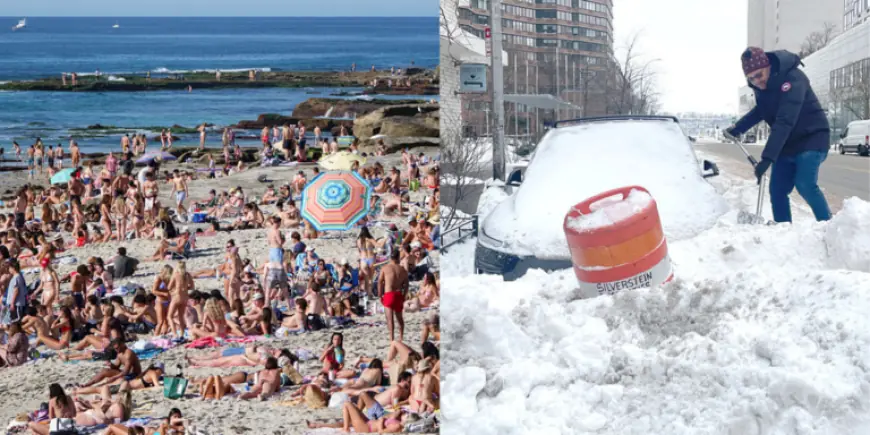
The weather over North America is undergoing a significant transformation. After enduring weeks of Arctic air and snow in the eastern U.S., a pattern shift is set to offer welcome relief. The Western U.S. has experienced unusually warm temperatures, leading to snow droughts in several mountain ranges. This mid-month shift in the jet stream will not only bring storms to the West Coast and Rockies but also shield the East from extreme polar vortex conditions.
Polar Vortex Overview
The polar vortex, a band of cold air typically centered over the poles, has recently been displaced. Its lobes have spread, sending frigid air into the eastern U.S. Concurrently, the jet stream’s unusual dip allowed these Arctic air masses to move southward. This phenomenon has resulted in persistent cold waves and severe winter storms across the region.
Weather Statistics
- New York City experienced a snowfall of approximately 4 inches on December 27, 2025.
- January 31, 2026: A student falls in the snow at the University of South Carolina in Columbia.
- High temperatures in the West are about 15-20 degrees above the seasonal averages.
- San Francisco is projected to reach nearly 70 degrees during the warm spell.
- The Northern Rockies are seeing snow levels 50-90% below average.
- Salt Lake City reported only 0.1 inches of snow for the season, almost 33 inches below its normal.
Upcoming Weather Changes
The jet stream is predicted to alter its course, bringing much-needed precipitation in the form of rain and snow to the West. This development will provide significant relief to the snow drought affecting numerous mountain ranges. Additionally, the polar vortex is expected to retreat further north than originally forecasted, reducing severe cold outbreaks across the East.
Implications for the Regions
This anticipated weather change presents multiple benefits:
- The return of winter conditions in the West will enhance snowpack levels.
- Mountain snowpacks are crucial for summer water supply in agriculture and drinking.
- The Arctic Oscillation will help contain cold air, leading to fewer freezing events in the East.
As this new weather pattern develops, many regions across the West will finally see relief from their snow deficits, which have been troubling for months. The change is timely, ensuring adequate water supplies for the upcoming summer while offering respite from the harsh conditions experienced in the East.