

























Washington Post layoffs deepen shakeup under Jeff Bezos as “Amazon down” reports flare

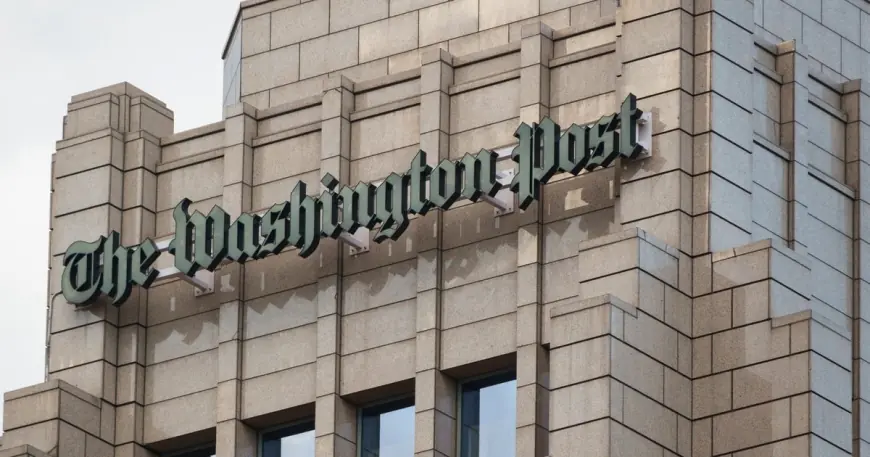
A sweeping round of Washington Post layoffs on Wednesday is resetting one of the country’s most prominent newsrooms, even as online chatter about “Amazon down” and cloud reliability underscores how closely modern media and commerce are tied to a small number of tech infrastructures. The job cuts landed as a sharp pivot for the paper’s coverage footprint, with entire desks eliminated and multiple foreign outposts scaled back.
Washington Post layoffs: how big, and what was cut
The Washington Post said it reduced its overall workforce by roughly a third, a move that included significant newsroom losses and deep cuts to coverage areas that have been long-running reader staples. Among the most visible changes:
-
The dedicated sports desk was eliminated.
-
Books coverage was cut back sharply.
-
Several foreign bureaus were closed or reduced.
Staff described a fast-moving day of meetings and notifications, with many employees learning details at the same time as the public. The size of the cuts signals that this was not a narrow trimming of costs but a reconfiguration of what the publication expects to cover and how it expects to deliver it.
Jeff Bezos and the business reset
Owner Jeff Bezos has kept a relatively light public touch on day-to-day newsroom decisions, but the latest restructuring reinforces the reality of the ownership era: major business choices are now inseparable from the newsroom’s shape.
The cuts come after a period of sustained pressure across the industry: shrinking advertising, intense competition for subscriptions, and audience fragmentation across video, social feeds, and newsletters. For the Post specifically, the layoffs point to a strategy that prioritizes a smaller set of coverage bets and a leaner cost base, rather than maintaining broad “everything desk” ambitions.
Even with a wealthy owner, a large news organization still has to solve recurring operating math. This week’s moves suggest leadership concluded that the existing structure could not be sustained without a major reduction in staff and scope.
What the coverage changes mean for readers
The practical effect is a narrower daily report in certain areas where readers are used to depth, voice, and continuity.
Losing a dedicated sports desk can mean fewer beat-level stories, less original reporting on local franchises, and more reliance on wire-style recaps or syndicated content. Scaling back books coverage can shrink author interviews, reviews, and cultural criticism—often the kind of work that builds reader loyalty but is harder to monetize quickly.
Foreign bureau reductions can be even more consequential. Pulling back from in-country reporting tends to reduce the number of original eyewitness accounts and deep local sourcing, especially during fast-breaking crises when parachute reporting is less effective.
A broader media backdrop: layoffs as an industry signal
The layoffs land in a moment when the economics of news are pushing outlets toward consolidation, specialization, and more aggressive cost cutting. The uncomfortable lesson for many organizations is that “prestige” alone doesn’t pay the bills, and that large, general-interest reporting footprints are expensive to maintain.
For journalists, the pressure is not just job security; it’s also the challenge of doing the same public-service mission with fewer hands. For audiences, it can mean fewer local investigations, fewer beat experts, and less ability to cover complex stories that require time and persistence.
“Amazon down” and cloud dependence: why the timing resonates
Alongside the layoffs news, “Amazon down” searches and user complaints have spiked intermittently in recent days, typically pointing to checkout slowdowns, page-loading errors, or brief service hiccups. In many cases, these episodes are partial—some users see issues while others don’t—and they can stem from localized network problems, heavy traffic, or cloud-service disruptions that ripple across many companies at once.
A key reason the topic keeps resurfacing is structural: a large share of the internet’s services rely on the same cloud backbones. When a major cloud region has an operational issue, downstream sites can degrade in unpredictable ways—sometimes showing up as “the store is down,” even if the core retailer remains mostly functional.
As of Thursday, February 5, 2026 (ET), there has not been a single, universally confirmed nationwide shutdown of Amazon’s retail site tied to the layoffs news cycle, but the recurring reports highlight how fragile “always on” expectations can be.
What to watch next
Two tracks now matter:
-
For the Post: whether leadership clarifies what coverage areas will be prioritized, how quickly new workflows replace eliminated desks, and whether additional buyouts or restructuring follow once the new model is in motion.
-
For Amazon reliability chatter: whether any operational issues expand beyond sporadic user reports into clearly acknowledged service degradation, and whether businesses that depend on cloud hosting change their redundancy plans after the latest reminders.
The larger takeaway is that both stories—newsroom downsizing and “site down” anxiety—are symptoms of the same era: tighter margins, higher audience expectations, and systems where a few large decisions (or a single technical failure) can reshape what millions of people see and trust each day.
Sources consulted: Associated Press, Reuters, AWS Health Dashboard, Poynter