






















Peter Attia and Epstein Claims: What’s Known, What’s Not Confirmed, and Why the Rumor Cycle Keeps Spiking

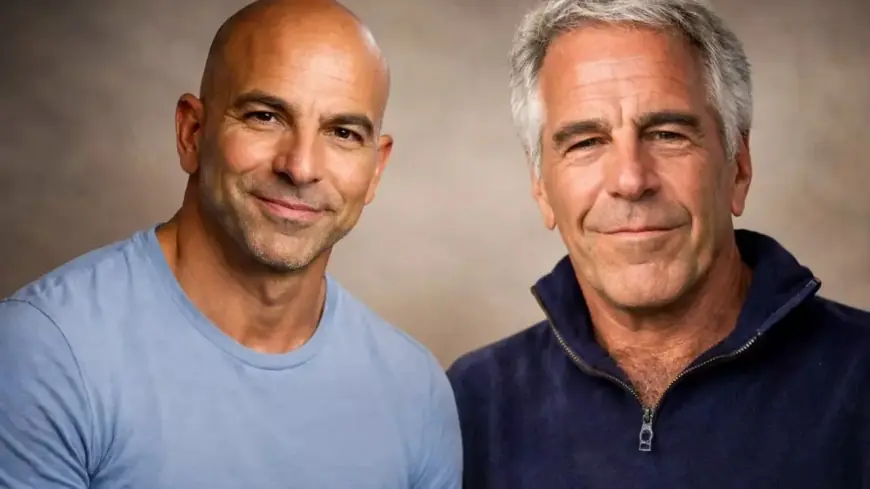
Online searches linking Dr. Peter Attia to Jeffrey Epstein have surged again, blending legitimate curiosity about Attia’s public profile with a familiar rumor dynamic: a high-interest scandal keyword that pulls unrelated names into its orbit, then spreads faster than verification can catch up. The result is a confusing mix of insinuation, recycled screenshots, and vague “files” talk—often without clear documents, dates, or context that would allow the public to evaluate what’s real.
Here’s the clean way to understand what’s happening, what can be responsibly said, and what to watch next.
Who is Dr. Peter Attia, and why his name trends so easily
Peter Attia is a physician best known in the public sphere for longevity and preventive health discussions—metabolic health, exercise, sleep, cardiovascular risk, and the idea of extending “healthspan,” not just lifespan. He has a large audience, which matters because visibility changes the physics of rumor: the more famous someone is, the more likely their name gets dragged into viral narratives that have nothing to do with their actual work.
When a search cluster includes “Peter Attia,” “Epstein,” and phrases like “files” or “released,” it often reflects a broader attention wave rather than a discrete, confirmed development about that specific person.
What “Epstein files” claims usually mean—and why they create false certainty
A key source of confusion is the phrase “Epstein files.” People use it as shorthand for many different things:
-
Court filings from civil lawsuits
-
Contact books or address lists
-
Flight logs or travel records
-
Depositions or exhibits that mention third parties
-
Investigative materials that may include unverified leads or references
Names can appear in these materials for reasons that range from meaningful to trivial: an email chain, a third-party mention, a contact entry, a forwarded message, or an investigative note. Appearance alone is not proof of a relationship, wrongdoing, or even an actual meeting. In high-profile cases, the “name appears” standard is exactly how misinformation spreads: it sounds definitive but often isn’t.
What’s actually known about “Peter Attia Epstein” allegations
At the moment, the most responsible description is that the viral claims circulating online are often not accompanied by primary, checkable documentation that clearly explains:
-
What record is being referenced
-
When it was created
-
What the context was
-
Whether it was authenticated in court or by investigators
-
Whether it reflects fact, hearsay, or a clerical reference
Without those anchors, a claim is not verifiable in a public-facing way, and repeating it as fact risks laundering rumor into “truth-by-repetition.”
If you’re seeing confident posts that assert a definitive connection while failing to show a clear, original record with context, treat that as a red flag—not a conclusion.
Behind the headline: incentives that turn a question into a viral “story”
The rumor cycle isn’t random. It’s shaped by incentives:
-
Engagement incentives: Epstein-related keywords reliably generate clicks, comments, and shares.
-
Narrative incentives: People want a tidy list of “good” and “bad” actors, even when real records are messy.
-
Algorithm incentives: Search and social systems reward novelty and outrage, not careful document reading.
-
Reputation incentives: Public figures become “targets of opportunity” because attention is already attached to their names.
This is why a physician known for longevity can trend alongside scandal terms: the algorithm doesn’t care about plausibility; it cares about velocity.
What we still don’t know—and what would change the story
There are specific missing pieces that, if they emerged in a credible and contextualized way, would change the conversation:
-
A clearly identified primary document, with provenance and date
-
Confirmation that a referenced record is authentic and not altered
-
Context showing why a name appears (contact entry, travel, correspondence, third-party mention)
-
Any official clarification or legal filing that addresses the specific claim
Until then, most of what circulates is better understood as search-driven speculation rather than a confirmed news development.
What happens next: realistic scenarios and triggers
-
Nothing new is substantiated, and the spike fades
Trigger: the viral posts stop being amplified and no primary documentation materializes. -
A real document surfaces, but it’s ambiguous
Trigger: a record appears showing a name reference without clarifying the nature of any contact—fueling more debate, not resolution. -
A clear public statement addresses the rumor directly
Trigger: sustained attention prompts a straightforward denial, clarification, or contextual explanation. -
Bad-faith amplification continues
Trigger: accounts keep pairing unrelated names with scandal keywords to farm engagement, regardless of evidence.
Why this matters: reputational harm and the cost of “implied guilt”
The practical impact is immediate: once a name is paired with a notorious scandal term, the association can linger in search results long after the claim is debunked or shown to be baseless. That’s reputational harm without due process, created by suggestion rather than proof.
If you want, I can also explain a quick checklist for evaluating any “files” claim you see—what to look for in the document itself, how to spot altered screenshots, and which details are essential before treating anything as credible.