












Venezuela Still Awaits a Plan, One Month On


The recent events in Venezuela have caused international attention following the U.S. military operation that captured Nicolás Maduro on January 3, 2026. The swift and precise operation aimed to dismantle what the U.S. government labeled a criminal regime.
Venezuela’s Current Situation One Month After the Operation
Following Maduro’s capture, the political landscape in Venezuela is marked by uncertainty. Delcy Rodríguez, Maduro’s former vice president, has assumed control. While she presents herself as a transitional leader, her administration appears inconsistent, shifting its stance based on the audience.
U.S. Military Actions and Economic Pressure
- U.S. forces escalated air, naval, and intelligence operations in the weeks before the raid.
- Operations included destroying vessels involved in narcotics trafficking and seizing tankers with sanctioned Venezuelan oil.
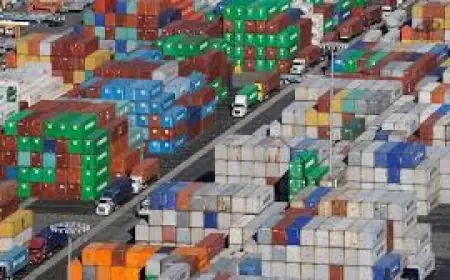
- U.S. officials continue to impose maritime interdictions on Venezuelan oil shipments, focusing on oil revenues as a primary tool of influence.
Despite significant military action, there remains ambiguity regarding the U.S.’s strategic objectives in Venezuela. Initial briefings lacked clarity on who governs in Caracas or what the U.S. hoped to achieve politically.
Rodríguez’s Government: An Inconsistent Authority
Rodríguez has promised oil-sector reforms and cooperation with the U.S., while simultaneously advocating for Venezuelan sovereignty. This dual approach reflects her attempt to manage relationships both domestically and with foreign interests.
However, there has been a noticeable absence of concrete plans addressing corruption or establishing accountability. Her government has faced criticism for failing to articulate a vision for elections or constitutional reform.
Mixed Signals from the U.S. Administration
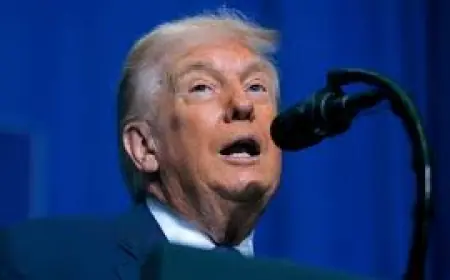
U.S. Secretary of State Marco Rubio has indicated there are no current plans for further military actions, yet he retains the option for force if Rodríguez’s government does not align with U.S. expectations. President Trump has been more direct, warning Rodríguez of dire consequences if demands are not met.
International Reactions and Prospects
Regional reactions have been varied. While Argentina’s President Javier Milei welcomed the U.S. operation, countries like Brazil, Mexico, and others condemned it, citing violations of international law. Concerns over U.S. interventions have echoed among these nations.
On a global scale, China and Russia have criticized the U.S. for its actions. China has shifted its energy purchasing strategies, while Russia exploits the situation to highlight Western hypocrisy.
Future Challenges in Venezuela
Analysts are skeptical about Venezuela’s path forward. There are predictions that oil output could increase modestly, but ongoing issues such as legal chaos, regulatory opacity, and security concerns remain significant hurdles.
One month post-operation, while the U.S. demonstrated military efficiency, the country faces unclear strategic outcomes. Venezuela is still unstable, with longstanding power structures persisting, leaving a complex challenge ahead for U.S. policymakers.