























House Speaker Johnson Confident in Votes to Halt Partial Shutdown by Tuesday


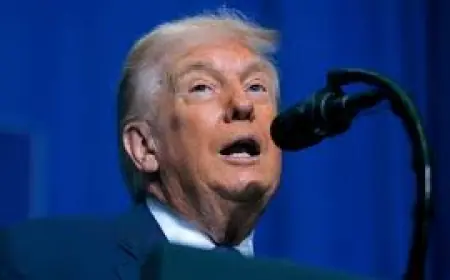
U.S. House Speaker Mike Johnson expressed confidence on Sunday that he has sufficient Republican support to end a partial government shutdown by Tuesday. During an appearance on NBC’s “Meet the Press,” he acknowledged logistical challenges in gathering lawmakers due to travel disruptions caused by a recent snowstorm in the southeastern United States.
Context of the Government Shutdown
The shutdown began on Saturday after Congress was unable to secure a funding agreement. While the Senate passed a spending package on Friday, the House remained in recess. Lawmakers are keen to ensure that discussions on immigration enforcement do not interfere with other government operations.
Shifting Focus to Immigration Reforms
Following the shutdown, Johnson indicated that the House would engage in a two-week debate concerning reforms for Immigration and Customs Enforcement (ICE). He emphasized that their aim is to fund all agencies except the Department of Homeland Security (DHS) by the Tuesday deadline.
- The Senate’s deal separates DHS funding from the broader budget.
- New spending allows funding for departments like the Pentagon.
- ICE reforms are being pushed amid public outcry after two shooting incidents in Minneapolis.
Democratic Demands on ICE Practices
Democrats are advocating for significant reforms within ICE, including the introduction of mandatory body cameras, the cessation of roving patrols, and the banning of face masks worn by agents. Representative Ro Khanna, a Democrat from California, questioned the morality of voting for continued ICE funding in light of recent tragedies.
Future Negotiations on DHS Funding
Johnson expects that negotiations over DHS practices will occur in good faith after immediate funding issues are resolved. Although the bill contains a stop-gap measure for DHS funding, discussions on long-term funding solutions are expected to unfold over the next few weeks.
This political maneuvering reflects a need for both parties to navigate a delicate situation without halting essential government functions. The outcome will be crucial for determining how immigration enforcement is approached moving forward.