























Do Cold Temperatures Cause Trees to Pop? Here’s the Explanation

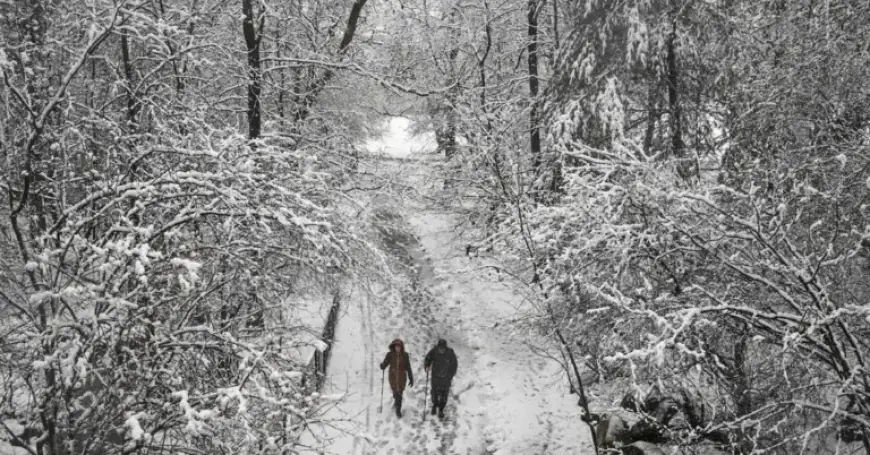
Winter presents a unique challenge for trees, as cold temperatures can cause notable sounds and physical changes. During these months, many trees are dormant, preparing for the arrival of spring. However, extreme cold can interfere with their structure. This raises the question: Do cold temperatures cause trees to pop?
Effects of Cold on Trees
As temperatures drop across large regions, trees can exhibit distress. This distress may manifest as audible snaps and pops. However, these sounds don’t necessarily indicate catastrophic failures.
Understanding Frost Cracks
The primary concern for trees in freezing conditions is the formation of frost cracks. These cracks occur when the water and nutrient-carrying vessels within the tree, known as phloem and xylem, freeze and expand. This expansion leads to vertical fissures in the trunk.
Vulnerability of Tree Species
Not all trees are equally affected by frost cracks. Certain species, particularly those with thinner bark, are more susceptible. Maple, linden, and birch trees often experience these cracks. Expert Eric Otto from the Minnesota Department of Natural Resources notes that even native trees can be impacted, while nonnative varieties may be at a higher risk if they are not adapted to local climates.
- Thin-barked species prone to frost cracks:
- Maple
- Linden
- Birch
Impact and Recovery
When outer and inner bark layers rapidly expand and contract, they create a snapping or crackling sound. This phenomenon is similar to how water pipes react to freezing temperatures in a home.
Dr. Otto explains that these bursts, which can sometimes sound like gunshots, are not lethal to the tree. However, they may make it more vulnerable to decay, insect infestations, and canker pathogens.
Healing and Adaptability
Most frost cracks are temporary. They tend to open and close with changing temperatures. Only in extreme temperature shifts might a crack remain open, jeopardizing the tree’s health. Fortunately, individual trees have thousands of vessels, meaning that the failure of one does not generally affect overall function.
Prior to winter, many trees prepare by reducing their water content, entering a dormant and dehydrated state. In states like Minnesota, even the harshest winter conditions do not pose a significant threat to native trees, as they are well-adapted to withstand the cold.
Conclusion
In summary, while cold temperatures can indeed lead to the popping sounds associated with trees, the effects are manageable for most species. Understanding these processes is crucial for maintaining healthy trees in colder climates.