
























Pentagon Shifts Focus: China Drops as Top U.S. Defense Priority

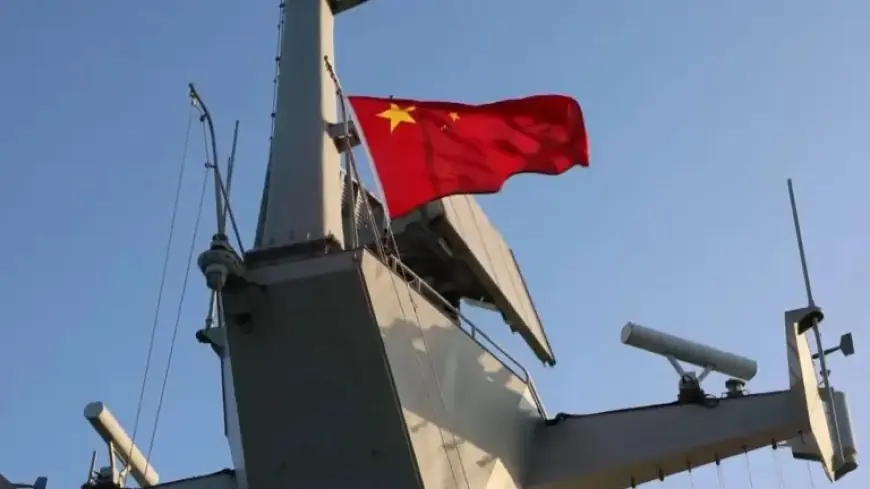
The Pentagon has officially shifted its defense priorities, downplaying China’s threat in its latest strategic framework. The 2026 National Defense Strategy indicates a new focus on domestic security and the Western Hemisphere, reflecting a substantial change in U.S. military priorities.
Shift in Defense Priorities
Under previous administrations, particularly that of President Joe Biden, China was regarded as a primary adversary. However, the Pentagon now views Beijing as a relatively stable player in the Indo-Pacific. According to the new strategy, the goal is to deter China from trying to dominate the United States or its allies.
Strategic Foundations
This updated strategy builds on principles established in President Donald Trump’s National Security Strategy from last year. Key objectives include:
- Reasserting military dominance in the Western Hemisphere.
- Strengthening military capabilities in the Indo-Pacific.
- Reevaluating relationships with European partners.
The document emphasizes a critical but limited role for U.S. military support to European allies. It argues for a significant shift in tactical approaches to avoid previous missteps and to enhance America’s global standing.
Military Focus on the Homeland
The strategy outlines plans for improved defense of the U.S. homeland. This includes maintaining control over crucial territories in the Western Hemisphere, such as the Arctic and Panama Canal. The Pentagon aims to ensure access to these regions for military and commercial purposes.
Vigilance Against North Korea
South Korea is highlighted as a focal point of defense, especially in light of the North Korean threat. The document urges South Korea to enhance its defensive capabilities, pointing out its recent 7.5% increase in military spending. About 28,500 U.S. personnel are stationed in South Korea, providing essential support for deterrence efforts.
Europe and Ukraine
While President Biden has prioritized aid to Ukraine in its conflict with Russia, the new Pentagon strategy calls on NATO allies to take the lead in supporting Ukraine’s defense. Stability in Ukraine is termed as primarily a European responsibility, indicating a shift in the U.S. commitment levels.
Russia as a Manageable Threat
Russia is characterized as a persistent but manageable threat, notably less capable of challenging Europe’s NATO allies effectively. The strategy highlights that the military capabilities of European nations significantly outweigh those of Russia, particularly in the context of economic strength.
Future Considerations
The National Defense Strategy points out that while Europe remains an essential theater, its global economic influence is diminishing. As a result, U.S. defense priorities will increasingly emphasize homeland security and countering Chinese influence.
China is identified as the most formidable nation relative to the U.S. in over a century, which underscores the Pentagon’s aim to maintain a favorable military balance in the Indo-Pacific. Importantly, the strategy is framed not as a quest to dominate China but to ensure that it does not become hegemonic over the U.S. or its allies.