

























Judge Questions Trump’s Authority to Construct White House Ballroom

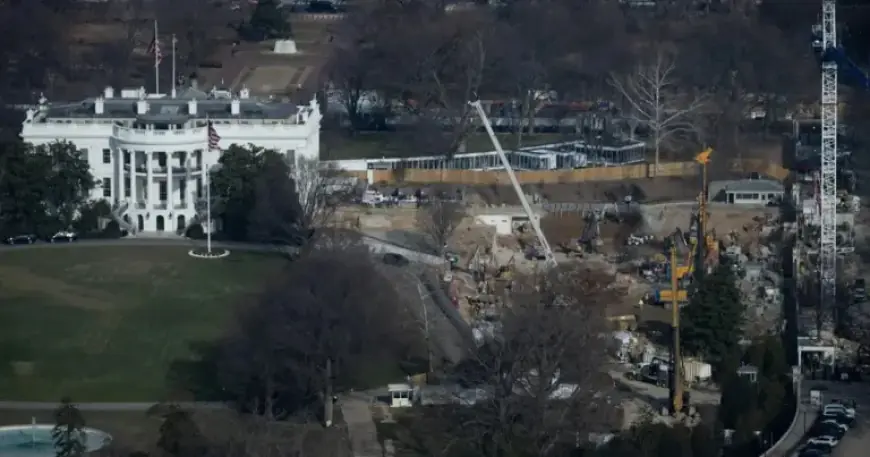
A federal judge is questioning the Trump administration’s authority to proceed with construction on the East Wing of the White House. U.S. District Judge Richard Leon expressed skepticism regarding claims that the administration has the proper authorization to continue the project.
Challenges to Trump’s Authority for White House Renovations
The legal dispute centers around a motion filed by the National Trust for Historic Preservation. This group seeks to halt ongoing construction until the Trump administration adheres to necessary approval processes allegedly bypassed.
Key Arguments in Court
- Whether the president can unilaterally renovate the White House.
- Whether funding can be sourced from private donations instead of Congressional appropriations.
Attorney Tad Heuer, representing the Trust, contends that renovation projects of this magnitude—specifically the 90,000 square feet East Wing renovation—require explicit Congressional approval. He highlighted that Congress typically allocates a limited budget for the White House’s upkeep.
Conversely, the administration argues that this authority encompasses the ongoing renovation. Judge Leon remarked that the administration’s interpretation of its authority seems excessively broad.
The Financing Structure Under Scrutiny
During the hearings, Leon critiqued the arrangement for funding the $400 million ballroom project. This funding was collected through a nonprofit, managed by the National Park Service, and subsequently funneled to the Executive Residence under Trump’s supervision. Leon characterized this financing model as convoluted.
Concerns Raised by the Trust
Heuer argued that each delivery of construction materials poses potential harm to the public and stressed that Trump should have sought Congressional funding before initiating the project. Roth, a senior Justice Department official, countered, asserting that Trump avoided using taxpayer money intentionally.
The ballroom is targeted for completion by the summer of 2028, with construction indicating potential risks to surrounding areas and historical sections of the White House.
Preservation and Legal Implications
The National Trust’s lawsuit emphasizes the necessity of adhering to legal frameworks when modifying public properties. It argues that no president should be permitted to demolish parts of the White House without appropriate reviews
Despite this, Judge Leon previously denied the Trust’s request for a temporary restraining order, noting insufficient evidence of irreparable harm.
Details of the Construction Project
- Size of the Ballroom: Approximately 22,000 square feet.
- Ceiling Height: 40 feet.
- Capacity: Designed for 1,000 guests.
- Total Renovation Area: About 89,000 square feet over two floors.
The renovation plans include not only a ballroom but also a new secure bunker, office space for the first lady, and additional amenities. The design will feature numerous windows and columns to enhance its aesthetic appeal.
Future Steps and Community Involvement
The Trump administration recently shared plans with the Commission of Fine Arts, which advises on design matters in the capital. Although the commission’s assessment did not require a vote, concerns about the project’s scale were raised. Another review is expected next month.
As the situation progresses, the administration’s adherence to legal protocols surrounding the construction will remain under scrutiny by both the courts and advocacy groups. Judge Leon is set to release a more detailed opinion in February.