




















Europe Awakes to Trump’s Greenland Threat with Shock

European nations have responded urgently to President Donald Trump’s recent threats regarding Greenland, a territory of Denmark. On a Saturday, Trump announced sanctions against several European countries for rejecting U.S. claims over Greenland. This led to an emergency meeting of EU ambassadors in Brussels on the following Sunday.
Continental Alarm Over Greenland Threat
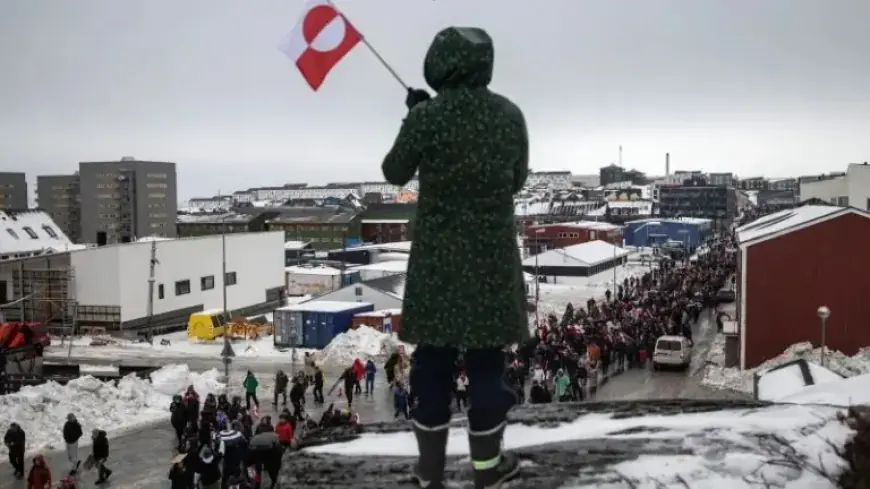
Trump’s threat sparked protests in Nuuk, the capital of Greenland, where a notable quarter of the population demonstrated against any potential annexation. Historically, European allies tend to tread carefully in their responses to the U.S., but this incident prompted a unified and emphatic reaction across the continent.
Key Reactions from European Leaders
- Emmanuel Macron – The French President criticized the tariff threats as “unacceptable,” emphasizing that intimidation would not influence Europe. He vowed a coordinated response to uphold European sovereignty.
- Keir Starmer – The UK Prime Minister condemned the application of tariffs on NATO allies as fundamentally wrong.
- Giorgia Meloni – Italy’s Prime Minister described Trump’s move as an “error” and emphasized her disagreement with imposing tariffs that jeopardize security cooperation regarding Greenland.
U.S. Justification for Greenland Claims
Trump defended the claim over Greenland by asserting its strategic importance against Chinese and Russian threats in the Arctic. His administration contends that possessing Greenland is vital for developing a defense system, referred to as the Golden Dome, intended to protect North America from ballistic missile attacks.
Experts, however, contend that a 1951 agreement allows the U.S. to build defense facilities in Greenland without needing ownership of the territory. Vice President JD Vance’s site visits highlighted military installations focused on missile warning and satellite operations.
European Politicians’ Concerns
European leaders expressed concerns that Trump’s unilateral actions could benefit adversaries like Russia and China. EU foreign policy chief Kaja Kallas pointed out that divisions among allies serve Moscow and Beijing’s interests. Spanish Prime Minister Pedro Sanchez warned that any U.S. military action against Denmark would not only harm NATO but also embolden Vladimir Putin.
The Broader Context of U.S.-European Relations
Throughout both Trump administrations, European governments have often grappled with the rhetoric emanating from the White House. However, there is a growing consensus in Europe that the current U.S. administration poses a more significant challenge to transatlantic relations. Trump’s National Security Strategy has questioned the reliability of certain European countries as allies.
In a changing geopolitical landscape, some European nations recognize the need for greater defense self-reliance, although this goal requires long-term strategies. Historic remarks by Winston Churchill about the importance of allies resonate strongly today, emphasizing the difficulties of navigating international crises without united partnerships.